




A Metropolis Beneath the Earth
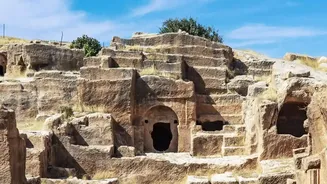
Deep in Turkey's Cappadocia region lies Derinkuyu, an astonishing feat of ancient engineering. This is not a simple cave system but a complete underground city, descending as deep as 85 meters—roughly the height of a 25-story building. Carved entirely
from soft volcanic tuff rock, it was capable of housing up to 20,000 people along with their livestock and food supplies. For centuries, starting as early as the 8th century BCE and expanded significantly during the Byzantine era, Derinkuyu served as a refuge. Its residents could disappear from the surface to escape invading armies, sealing passages with massive, rolling stone doors that could only be moved from the inside. But beyond providing security, the city offered another crucial form of protection: shelter from the region's harsh climate of blazing summers and freezing winters.
Nature's Air Conditioning
The true genius of Derinkuyu lies in its passive climate control. The city maintains a stable, comfortable temperature of around 15–17°C year-round, regardless of the weather on the surface. This is achieved through a sophisticated and extensive ventilation system. A central, 55-meter-deep vertical shaft acts as the city's main airway. This, along with a network of smaller shafts, creates a natural airflow through a phenomenon known as the 'stack effect'. The temperature difference between the deep, cool underground and the warmer surface creates a constant, gentle circulation. Cool, dense air sinks, pushing warmer, stale air up and out, ensuring a continuous supply of fresh oxygen even to the lowest levels. This system was so well-engineered that it prevented the buildup of toxic gases from thousands of inhabitants and their animals, all without a single modern fan.
The Modern Urban Heat Problem
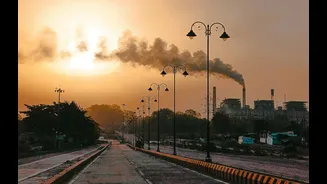
In contrast, our modern cities are becoming increasingly hotter. The 'urban heat island' effect, where concrete, asphalt, and steel absorb and radiate the sun's energy, makes metropolitan areas significantly warmer than their rural surroundings. Buildings with vast glass facades trap heat, and the exhaust from millions of air conditioning units pumps yet more hot air into the streets. This creates a vicious cycle where our attempts to cool our interiors only serve to heat our cities further, driving up energy consumption and straining power grids. As climate change leads to more frequent and intense heatwaves, this model is proving to be dangerously unsustainable.
Blueprints for a Cooler Future
This is where the lessons from Derinkuyu become profoundly relevant. The city demonstrates the power of subterranean and earth-sheltered architecture. The ground itself is a massive thermal regulator. Just a few meters below the surface, the soil maintains a much more constant temperature than the air. By building downwards, or using soil to cover buildings, modern architects can dramatically reduce the need for artificial heating and cooling. Studies show that underground structures can slash energy demand by huge margins, with some requiring almost no energy for temperature control. Furthermore, incorporating ventilation shafts inspired by Derinkuyu's passive system can provide natural air circulation, improving indoor air quality while consuming zero energy.
Looking Down to Move Forward
This isn't just a theoretical concept. Cities around the world are already putting these principles into practice. In Helsinki, an entire 'underground city' includes shopping centers and sports facilities that benefit from the earth's natural insulation. In Australia, the town of Coober Pedy is famous for its underground 'dugout' homes, which provide comfortable living in a harsh desert climate. Planners are increasingly viewing the subsurface not as an afterthought for pipes and subways, but as a valuable, habitable space that can enhance sustainability and resilience. From underground data centers that require less cooling to urban farms that can grow produce year-round, the applications are vast and transformative.