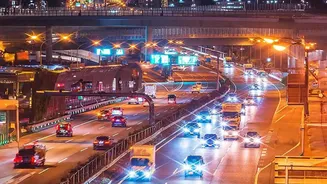










A Green Light When It Matters Most
In a city where traffic can mean the difference between life and death, Delhi is betting on artificial intelligence to clear the way for its emergency services. The Union Cabinet has approved a comprehensive Intelligent Traffic Management System (ITMS)
for the capital. A key feature of this high-tech overhaul is its ability to give priority to ambulances and other emergency vehicles. The system is designed to automatically create what are known as 'green corridors', ensuring these vehicles face minimal red lights and stoppages as they navigate the city's crowded streets, a process that promises to significantly reduce emergency response times.
How the AI System Works
The technology relies on a network of communication between emergency vehicles and traffic signals. Ambulances and other designated vehicles will be fitted with special sensors. As an equipped vehicle approaches an intersection, the traffic signal will detect its presence from a distance, potentially up to 500 metres away. The AI system, which serves as the 'brain' of the traffic network, then automatically turns the upcoming signal green. This signal will remain green just long enough for the emergency vehicle to pass through before resuming its normal cycle, a process that is repeated at each subsequent junction along the route. This creates a seamless path through traffic without the need for manual intervention by traffic police at every intersection.
More Than Just Ambulances
While giving priority to ambulances is a major focus, the benefits of the ITMS extend to other first responders as well. The system is designed to facilitate faster passage for fire tenders and police vehicles during emergencies. This integrated approach ensures that all critical services can reach their destinations more quickly. The core technology, which relies on real-time data and predictive analytics, will allow the Delhi Police to detect congestion and accidents faster, enabling quicker diversions and more effective operational responses to any incident on the road.
Implementation and Timeline
This ambitious project, with an approved budget of ₹1,789.52 crore, will not be implemented overnight. The rollout is planned in three phases over a 24-month period, followed by a five-year maintenance contract. The system will be deployed across 42 identified major traffic corridors in the city. The first phase will begin with five key corridors, including Ring Road and Outer Ring Road, and will see the installation of adaptive signals at 250 junctions. The subsequent phases will expand the network until all 42 corridors are covered. The Delhi Police will implement the project with technical support from the Centre for Development of Advanced Computing (C-DAC).