
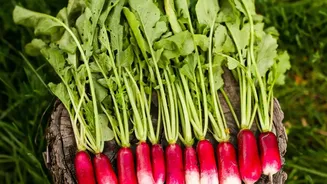

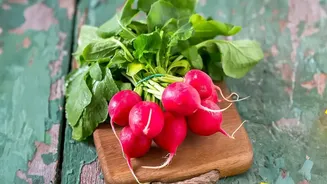
The Power of Radish Leaves (Mooli Ke Patte)
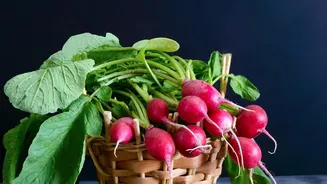
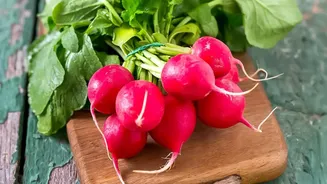
Often tossed aside, radish leaves, or 'mooli ke patte', are in fact more nutrient-dense than the radish root itself. They are loaded with essential vitamins and minerals. These greens are an excellent source of Vitamin C, which is crucial for a strong
immune system, helping the body fight off common infections like the cold and flu. They also provide a significant amount of Vitamin A, important for vision and skin health. Furthermore, radish leaves are packed with iron and phosphorous, which can help combat fatigue and are beneficial for those with anaemia. The high calcium content in the leaves contributes to stronger bones and can play a role in preventing conditions like osteoporosis. The dietary fibre present helps in regulating digestion, preventing issues like bloating and constipation.
Cooking with Mooli Ke Patte
Integrating radish leaves into your diet is simple and adds a unique, slightly peppery flavour to meals. The most classic Indian preparation is 'Mooli ke Patte ki Sabzi', a simple stir-fry with garlic, cumin seeds, and a touch of turmeric. You can also finely chop the leaves and knead them into the dough for parathas or theplas, adding a nutritional boost to your flatbreads. Another easy way to use them is to add a handful to your regular dal, allowing them to wilt and infuse the lentils with their nutrients. For a quick side dish, simply sauté the leaves in a little oil with garlic, just as you would with spinach. They can also be blended into green chutneys or added to soups for extra flavour and health benefits.
The Untapped Potential of Beet Greens
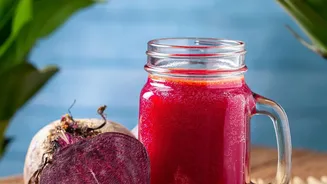
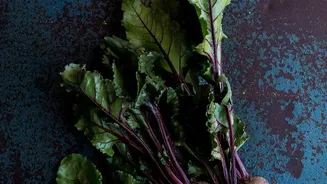
Much like radish tops, the vibrant green leaves of the beetroot are a treasure trove of nutrition. They boast a higher iron content than spinach and are exceptionally rich in Vitamin K, a critical nutrient for bone health and blood clotting. A single serving can provide a substantial portion of your daily Vitamin K needs. Beet greens are also packed with Vitamin A and C, along with powerful antioxidants like lutein, which supports eye health. The natural nitrates found in the leaves can help improve blood flow and support cardiovascular health. Moreover, they are a good source of potassium and magnesium, minerals essential for regulating blood pressure and muscle function.
Bringing Beet Greens to Your Table
Beet greens have a mild, sweet flavour similar to Swiss chard and can be used in a variety of dishes. A simple South Indian 'poriyal' or a North Indian 'sabzi' can be made by stir-frying the chopped leaves and tender stems with mustard seeds, onions, garlic, and spices. Like spinach, they wilt down beautifully when cooked. You can easily incorporate them into dal, such as a comforting 'Beet Greens Dal' with masoor or moong dal, which makes for a wholesome and complete meal with roti or rice. The leaves can also be added raw to salads, blended into smoothies for a nutrient kick, or added to soups in the last few minutes of cooking. Their versatility makes them an easy and delicious way to minimise waste and maximise nutrition.
Embrace a Root-to-Leaf Philosophy
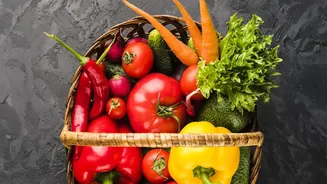
The habit of using both the root and the leaves of vegetables like radish and beetroot is not just about getting more nutrients; it's about adopting a more sustainable, zero-waste approach to cooking. By seeing the potential in what we typically consider scraps, we unlock more flavour, texture, and health benefits from the food we already have. This mindset can extend to other vegetables too, such as using carrot tops to make pesto or broccoli stems in stir-fries. It encourages a more creative and resourceful way of thinking in the kitchen, where every part of the vegetable is valued for its contribution. Next time you buy a bunch of mooli or chukandar, hold on to those greens. They are not food waste; they are a bonus ingredient waiting to be discovered.