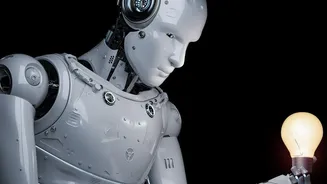









The Rise of the Robot Wordsmith
Restaurant owners are among the busiest people on the planet. Between managing staff, ordering ingredients, and ensuring every customer leaves happy, there’s little time left for creative writing. This is where Artificial Intelligence steps in. With the promise
of saving time and money, AI tools are being used for everything from answering phones to managing inventory. A growing number of restaurateurs now also turn to AI to write social media posts, marketing emails, and, most visibly, their menu descriptions. The appeal is obvious: paste in a list of dishes, and within seconds, you have a fully written menu. For a time-strapped owner juggling dozens of tasks, it feels like a lifesaver. This technology is no longer complex or prohibitively expensive; it's accessible and designed to be user-friendly, making it a tempting solution for businesses looking to streamline operations.
From 'Delicious' to 'Disturbing'
The results, however, are often less than appetizing. At their best, AI descriptions are filled with a repetitive string of generic adjectives like 'delicious', 'savory', 'flavourful', and 'perfectly cooked'. The language sounds knowledgeable but lacks specificity, resulting in an uncanny valley effect that can make food feel unappealing. At its worst, the technology can produce bizarre and nonsensical results. In one infamous case, an Indian restaurant's 'Chicken Pops' were described by an AI as 'Small, itchy, blister-like bumps caused by the varicella-zoster virus', a near-perfect description of chickenpox. These errors happen when an AI misinterprets a dish name or scrapes incorrect information without human oversight. Even when the descriptions aren't grotesquely wrong, they often fail because they describe a generic version of a dish, not the unique creation of a specific chef. The AI doesn't know about the secret ingredient from the chef's grandmother or the specific char from a wood-fired grill unless it's explicitly told.
A Menu Is More Than a List
A great menu is a restaurant's opening argument. It’s the first real taste a customer gets of the establishment's identity. The words chosen are supposed to guide, entice, and tell a story. A well-written description can transport you to a bustling market in another country or evoke the comfort of a home-cooked meal. It reflects the chef’s passion, the restaurant’s philosophy, and the origin of its ingredients. When a menu reads like it was written by a machine that has never tasted food, that connection is lost. The descriptions may be grammatically correct, but they are hollow. They lack the personal touch, the unique voice, and the sensory detail that makes a dish sound irresistible. This loss of authenticity is not a small detail; for many diners, it can erode the trust they have in the establishment before the first plate even arrives.
The Missing Human Ingredient
The core issue is that AI, for all its pattern-matching prowess, cannot replicate human experience. It can't taste, smell, or feel the texture of a dish. It can't understand the cultural significance of a recipe or the pride a chef takes in their work. Describing food is a deeply sensory and emotional act, one that requires a human touch to be truly effective. Many chefs and food writers spend years honing their ability to translate the experience of eating into words. They know that 'crispy' is different from 'crunchy', and 'creamy' can mean a dozen different things. While AI can be a useful assistant—helping to correct grammar or suggest alternative words—it falls short when tasked with being the primary creator. Relying on it entirely risks creating a sea of sameness, where every restaurant’s menu sounds exactly like the next.
A Tool, Not a Chef
The future of AI in the hospitality industry is not necessarily a dystopian one filled with robotic chefs and soulless menus. Instead, the industry is learning to use these tools more intelligently. For many, AI is most effective behind the scenes, optimizing inventory, predicting busy periods, and managing schedules. When it comes to creative tasks like menu writing, the best approach seems to be a collaborative one. A human can provide the core details, the story, and the unique sensory notes, while the AI can help structure the text or polish the language. As AI models become more sophisticated, they may get better at generating vivid prose. But for now, the most compelling menus will continue to be those written by people who are passionate about food, for people who are excited to eat it.