





A River Heavy with Himalayan Silt
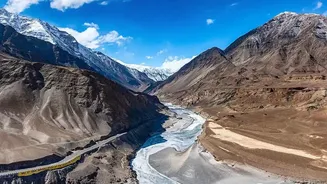
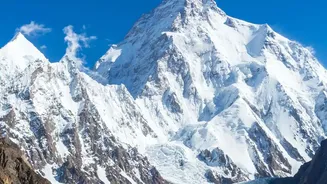
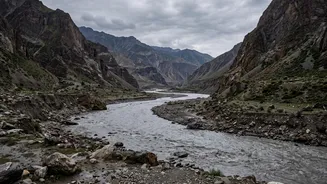
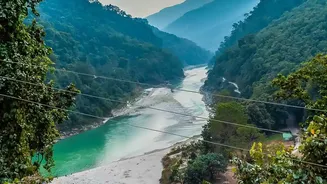
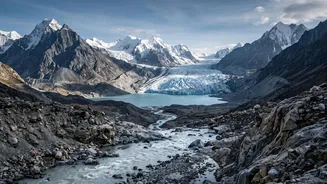
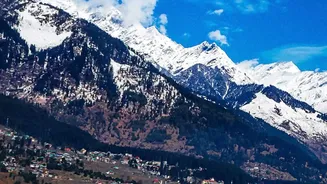
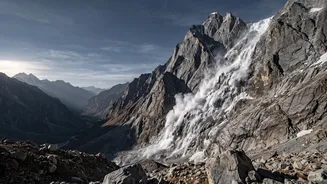
The Kosi's story begins high in the Himalayas, some of the youngest and most geologically fragile mountains in the world. As the river and its seven major tributaries carve their way south from Tibet and Nepal, they gather an immense amount of silt and sediment.
In fact, while the Kosi basin makes up only a small part of the greater Ganga river system, it contributes a disproportionately large share of its total sediment load, estimated at over 100 million tonnes annually. This incredible sediment load is the root cause of its instability.
From Steep Gorges to Flat Plains
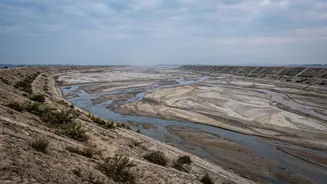
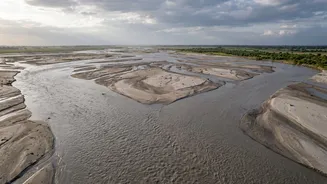
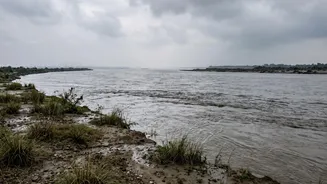
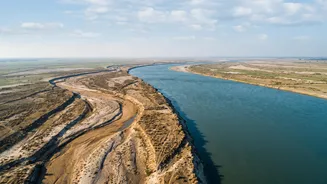
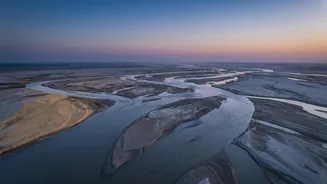
After racing through steep mountain gorges, the Kosi emerges onto the flat, vast plains of North Bihar. This sudden, dramatic drop in gradient is like a speeding car hitting a patch of mud; the river rapidly loses its energy and momentum. Unable to carry its heavy load any further, it begins to deposit massive quantities of silt onto its own riverbed. This process of deposition has created one of the world's largest alluvial fans—a massive, cone-shaped deposit of sediment stretching over 15,000 square kilometres.
The Constant Search for a New Path
Year after year, the relentless depositing of silt raises the riverbed higher and higher. Eventually, the river channel becomes so clogged that it sits at a higher elevation than the surrounding floodplain. During the monsoon floods, it becomes easier for the water to break its banks and carve a new, lower path through the adjacent land than to follow its own choked channel. This process, known as avulsion, is why the Kosi is so famously erratic. Over the last 250 years, the river has shifted its course westward by more than 120 kilometres, abandoning old channels and creating new ones in a constant, destructive dance across the plains.
The Embankment Paradox
In the 1950s, an ambitious engineering project was undertaken to 'tame' the Kosi. High embankments were built along its banks to confine the river to a single channel, theoretically preventing floods and protecting agricultural land. However, this solution created a new, more dangerous problem. By trapping the river, the embankments also trapped its sediment. With nowhere else to go, the silt settled within the embanked channel, raising the riverbed even faster than before. This has turned the Kosi into a super-elevated river, flowing precariously above the surrounding countryside, making any breach of the embankments truly catastrophic.
A Human and Ecological Tragedy
The devastating 2008 flood was a tragic illustration of this paradox. A breach in the eastern embankment near Kusaha, Nepal, caused the river to abandon its channel and rush into an old course it had not occupied for over a century. The resulting flood displaced over three million people in Bihar, destroying homes, farms, and lives in areas that had long been considered safe. The cycle of embankment breaches, which have occurred numerous times since the 1960s, traps communities in a state of perpetual vulnerability, disrupting agriculture, economy, and daily life. While the river can also be a source of livelihood through fishing, its unpredictable nature makes it a constant source of sorrow for millions.