



An Unprecedented Decline
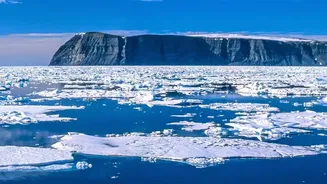
For decades, while Arctic ice was in a well-documented retreat, Antarctic sea ice remained surprisingly stable, even showing modest expansion. That trend took a sharp and dramatic turn after 2015. In mid-September 2026, as the Antarctic winter should
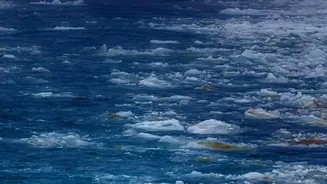
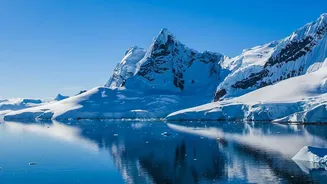
have been reaching its peak freeze, scientists confirmed the sea ice maximum was the third-lowest on record. The ice extent fell about one million square kilometres short of the long-term average. Alarmingly, the four lowest winter sea ice maximums since satellite records began in 1979 have all occurred in the last four years, signalling a fundamental shift in the system.
The Warm Water Intruder
A leading theory to explain this rapid melt points to an enemy from below: the ocean itself. The Southern Ocean is not uniform in temperature; it is stratified into layers. Deep below a protective layer of cold surface water lies a warmer, saltier mass of water known as Circumpolar Deep Water (CDW). For a long time, this deep heat was held back, unable to reach the floating ice shelves. However, recent studies using data from ships and robotic Argo floats show this warm water has been creeping closer to the continent and welling up towards the surface. It's as if someone has turned on the hot tap, allowing this warmer water to melt the sea ice and the crucial ice shelves from underneath.
A 'Triple Whammy' of Causes
The intrusion of warm water isn't happening in a vacuum. Scientists describe a 'triple whammy' of interacting factors. First, changes in atmospheric circulation, including stronger westerly winds linked to climate change and the ozone hole, are physically pushing surface water aside. This action, known as upwelling, helps draw the deeper, warmer water to the surface where it can melt ice. Second, a period of increased precipitation before 2016 actually helped trap this ocean heat at depth by creating a fresh, less-dense layer on the surface. When strong winds eventually mixed these layers, a massive amount of stored heat was suddenly unleashed. This combination has created a feedback loop, where less ice cover allows the ocean to absorb more heat, further preventing new ice from forming.
Why It Matters for India
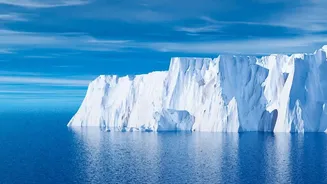
The fate of Antarctic ice may seem distant, but its stability has global consequences that directly impact India. The Antarctic ice sheet holds enough water to raise global sea levels by nearly 200 feet. While the melting of floating sea ice doesn't directly raise sea levels, its disappearance is critical. Sea ice acts as a protective buffer for the massive land-based ice shelves, shielding them from destructive ocean waves and storms. As ice shelves are destabilised by warm ocean water, the glaciers behind them can flow faster into the ocean, accelerating sea-level rise and threatening coastal cities from Mumbai to Chennai. Furthermore, the Southern Ocean plays a vital role in regulating global heat and carbon storage, meaning changes there can affect weather patterns worldwide.