







The Invisible Arteries of Digital India
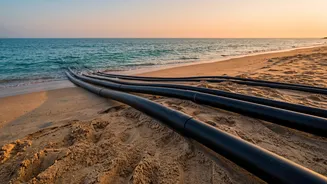
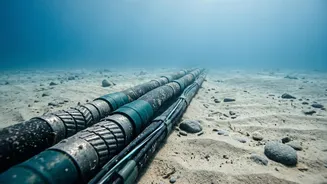
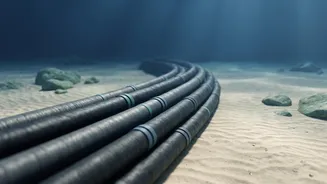
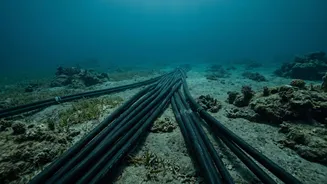
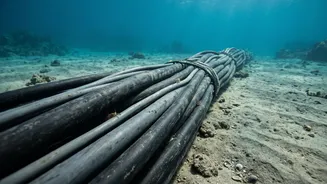
It feels wireless, but the internet is a very physical thing. More than 99% of all international data, the lifeblood of our digital economy, travels not through satellites, but through fibre-optic cables laid across the ocean floor. These submarine cables are
the true highways of the modern world, carrying everything from your banking transactions and work emails to government communications and streaming services. India, as one of the world’s fastest-growing digital economies, is critically dependent on this underwater network. With services exports valued in the hundreds of billions of dollars and a domestic economy powered by digital transactions, the stability of these connections is not just a technical concern—it's a matter of national economic health.
Mumbai's Critical Chokepoint
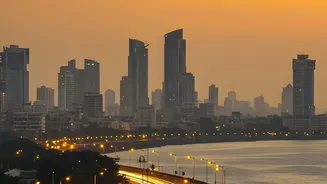
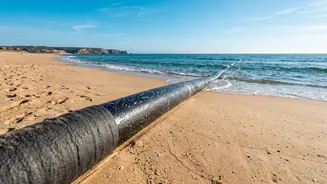
The challenge for India lies in a startling lack of diversification. Of the 18 major intercontinental cables that connect India to the global internet, at least 13 of them come ashore along a single, six-kilometre stretch of coastline near Versova in Mumbai. This intense concentration makes Mumbai the undisputed gateway for the majority of India's data traffic, particularly data heading west towards the Middle East, Africa, and Europe. While cities like Chennai serve as a secondary hub for traffic to the east, Mumbai’s dominance creates what experts call a critical single point of failure. This means a single localised event—be it a natural disaster, a major shipping accident, or even deliberate sabotage—could have a catastrophic impact on the nation's connectivity.
The Long Wait for a Fix
When an undersea cable is damaged, often by a ship's anchor or underwater landslide, repairing it is a complex and urgent task. It requires specialized cable-laying and repair ships equipped with deep-sea robotics. Herein lies India’s second major vulnerability: the country has no Indian-flagged or Indian-owned repair vessels. Consequently, for any repair needed within its waters, India is entirely reliant on foreign fleets, which are typically based in hubs like Singapore or Dubai. Before these ships can even begin work, they face a mountain of paperwork. The process requires clearances from multiple government bodies, including the ministries of Home Affairs, Defence, and Shipping, as well as the Coast Guard. This bureaucratic maze can turn a technical problem into a months-long crisis.
A Race Against Bureaucracy
The clearance process for foreign repair vessels can take weeks, and in some cases, the entire repair cycle from fault to fix can stretch to four or five months. This delay stands in stark contrast to the immediate and crippling effect of a major outage. A multi-cable failure near Mumbai could sever the bulk of India’s international bandwidth, not for hours, but potentially for months. The economic and social consequences would be immense, disrupting everything from financial markets to daily life. Recognizing this threat, the Department of Telecommunications is reportedly working on a solution: a single-window online portal to streamline the approval process. The goal is to bring all the necessary agencies onto one platform to cut down delays, with a tentative implementation target of March 2027.
Building a More Resilient Future
Solving this vulnerability requires a two-pronged approach. First is addressing the repair bottleneck. Beyond streamlining permits, there is a growing call to develop a domestic repair capability, which could involve public-private partnerships to build or acquire Indian-flagged repair ships. The second, more crucial long-term solution, is diversification. To reduce the over-reliance on Mumbai, India must develop and incentivise new cable landing stations along its vast coastline. Cities like Visakhapatnam, Kochi, and Tuticorin are emerging as viable alternatives that would distribute the risk and build a more robust and resilient national digital infrastructure, ensuring that a single point of failure cannot bring the country to a standstill.