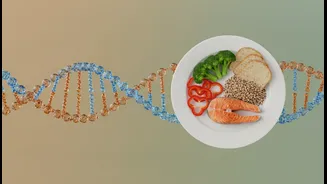










The Foundation of Good Health
Before we dive into the world of genes, it's crucial to remember the basics, because they work for almost everyone. Decades of research have consistently shown that a healthy dietary pattern is built on a few core principles. A diet rich in a wide variety
of plants like fruits and vegetables, whole grains, and lean proteins is fundamental. Health organisations worldwide agree on the benefits of eating whole or minimally processed foods and limiting added sugars, sodium, and unhealthy fats. Think of this as the solid foundation of a house. Without it, any fancy decorations—or in this case, genetic tweaks—won't be very effective or stable. These guidelines are not just suggestions; they are evidence-backed strategies for preventing chronic diseases and promoting overall well-being. Whether your ancestors were Vikings or Mughals, your body will almost certainly benefit from eating more vegetables and less ultra-processed food.
What Genetic Testing Can Reveal
This is where it gets personal. The field of nutrigenomics studies how our specific genes influence our response to different foods and nutrients. While it's not a crystal ball for creating a perfect diet, it can provide useful clues about your body's predispositions. For example, a well-known genetic link involves caffeine. Variations in the CYP1A2 gene determine whether you are a 'fast' or 'slow' metabolizer of caffeine. A slow metabolizer might find that an afternoon coffee disrupts their sleep, while a fast metabolizer can have an espresso after dinner without issue. This isn't about willpower; it's about how quickly your liver enzymes clear the caffeine from your system. This kind of information can help you make small, informed adjustments for better well-being.
Specific Clues Hidden in Your DNA
Beyond caffeine, there are other areas where genetics can offer specific guidance. One of the most studied is the MTHFR gene, which affects how your body processes folate (a B vitamin). Certain variations in this gene can make it harder for the body to convert folate into its active form. For individuals with this variation, a diet rich in natural folate from leafy greens, beans, and lentils is especially important. Another example is lactose intolerance. For many adults, the ability to digest lactose, the sugar in milk, decreases over time due to reduced activity of the LCT gene. A genetic test can confirm this predisposition, explaining why dairy might cause digestive discomfort. These are not mandates, but helpful nudges from your DNA. They can explain personal experiences and guide you toward food choices that make you feel better.
The Hype vs. The Reality
It's important to approach direct-to-consumer genetic tests with a healthy dose of skepticism. While the science is developing, many experts caution that the evidence is not yet strong enough to support creating entire diet plans based on DNA alone. Studies have shown mixed results, with some finding no significant difference in weight loss between those following a gene-based diet and those on a standard one. The accuracy of some commercial tests has also been questioned, with one lab finding that 40% of variants reported by consumer tests were false positives. Furthermore, diet is incredibly complex. Factors like your gut microbiome, lifestyle, sleep, and stress levels play a huge role in your health, often more so than the genetic variations currently tested for. Your genes are part of the story, but they are not the whole story.
Using Genes as a Tool, Not a Rulebook
The most sensible way to view nutrigenomics is as a supplementary tool. It adds a layer of personalisation to the solid foundation of basic nutrition. Think of it as moving from a standard map to one with real-time traffic updates. The main roads and destinations are the same, but you might get a helpful tip to avoid a particular jam or take a more scenic route. For instance, if you know you're a slow caffeine metabolizer, you can choose to limit your intake. If you have an MTHFR variant, you might focus more on folate-rich foods. These are minor adjustments, not a complete dietary overhaul. The goal is to use this information to fine-tune an already healthy diet, not to search for a magic bullet that lets you ignore the fundamentals.