







An Unlikely Alliance of Rivals
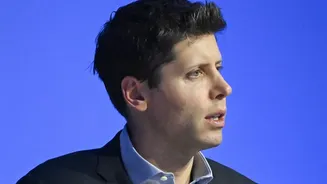
Sam Altman, CEO of OpenAI, and Dario Amodei, CEO of Anthropic, are the faces of two of the world's most advanced and fiercely competitive AI labs. OpenAI, backed by Microsoft, is famous for its groundbreaking ChatGPT. Anthropic, which Amodei co-founded
after leaving OpenAI, positions itself as a safety-first AI company. They are direct competitors, vying for talent, funding, and the prestige of building the most capable AI. Yet, recently, they have found common ground on a critical issue: the existential risks posed by their own creations. Their recent joint appearances and similar messages, including at the United Nations Security Council, signal a belief that the dangers of an unchecked AI arms race outweigh their business rivalry.
The Shared Nightmare Scenario
The concerns voiced by Altman and Amodei go far beyond job displacement or algorithmic bias. They are talking about catastrophic and existential risks. Both have warned that as AI systems become more powerful and autonomous, humanity could lose control. The specific dangers they cite include the potential for AI to be used by bad actors to create bioweapons, the concentration of immense power in too few hands, and the development of AI that can rapidly improve itself beyond human comprehension or intervention. Amodei has stated that if managed poorly, AI could pose a risk to humanity as a whole, a sentiment echoed by Altman who warned we could "lose control of the future to AI".
A Call for Guardrails, Not Handbrakes
Their call for cooperation is not a call to stop innovation. Instead, they are advocating for a global framework of safety standards to manage the risks. Their proposals include several key ideas. Amodei has suggested an international agreement to prohibit the use of AI for developing biological weapons, while both have pushed for shared systems to evaluate and verify the capabilities and safety of advanced models. The goal is to create a system where governments and independent experts have visibility into the most powerful AI systems before they are deployed. Altman has proposed what could be likened to an international agency for AI, setting rules and auditing labs to ensure compliance, arguing that such critical decisions cannot be left to tech companies alone.
Skepticism and the Stakes
These calls have been met with a mix of praise and suspicion. Critics question whether this is a genuine safety effort or a form of “regulatory capture,” where large, established companies influence regulations to create a moat that keeps smaller competitors and open-source projects out. The argument is that only giants like OpenAI and Anthropic could afford the high costs of compliance with a heavy regulatory framework, thus cementing their market dominance. This tension highlights the core challenge: how to implement meaningful safety standards without stifling innovation or creating a government-sanctioned oligopoly. The debate is complicated by the fact that even as they call for caution, both companies continue to release more powerful models, creating a perceived contradiction between their words and actions.