

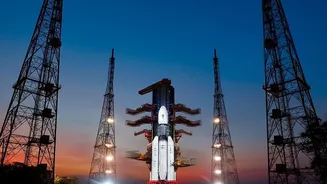
The Unforgiving Void of Space
Human spaceflight is arguably the most complex and dangerous endeavour a nation can undertake. Unlike launching a satellite, there is zero margin for error when lives are at stake. Space is an environment of extremes: from the violent forces of launch and the fiery
heat of re-entry to the vacuum and radiation of orbit. Every single component, from the launch vehicle to the tiny switches inside the crew capsule, must function perfectly. The history of space exploration is a stark reminder of the risks; minor malfunctions can lead to catastrophic failures. For ISRO, ensuring the safety of its 'Vyomanauts' is the absolute highest priority, shaping every decision in the Gaganyaan programme.
An Escape Plan for Every Scenario
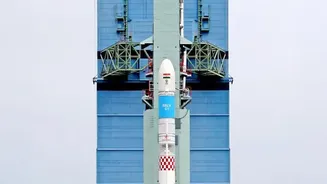
One of the most critical safety features of the Gaganyaan mission is the Crew Escape System (CES). This is essentially a small, powerful rocket attached to the top of the crew module, designed to pull the astronauts to safety in case of an emergency during launch or ascent. ISRO has conducted multiple tests, like the Pad Abort Test and the TV-D1 flight test, to validate this system under different conditions. These tests simulate failures at various altitudes and speeds to ensure the CES can fire in an instant, separate the crew module cleanly, and carry it a safe distance away from a malfunctioning rocket. This system is the astronauts' ultimate lifeline, and its reliability must be proven beyond any doubt before they can strap in for the real flight.
Testing for a Perfect Re-entry and Splashdown
Getting to orbit is only half the journey. The return trip is just as perilous. The crew module must withstand temperatures of thousands of degrees Celsius as it re-enters the atmosphere. Then, a precise sequence of parachutes must deploy to slow the capsule from hypersonic speeds to a gentle splashdown in the ocean. ISRO has been exhaustively testing these systems. Integrated Air Drop Tests have validated the parachute system, while other recent tests have focused on the 'Crew Module Up-righting System', a set of flotation bags that ensure the capsule stays upright after landing in the sea. Another test confirmed the 'Apex Cover Separation', a pyrotechnic event that jettisons the parachute cover at the right moment. Each test confirms that these automated sequences, which are out of the astronauts' control, will work flawlessly.
Why One Successful Test is Not Enough
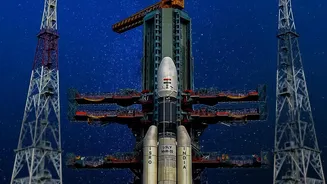
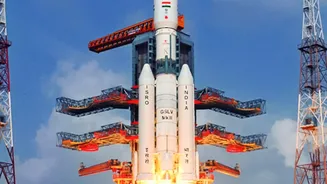
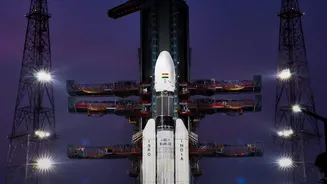
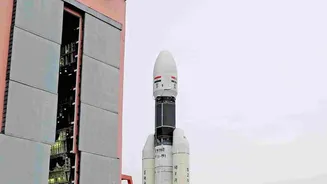
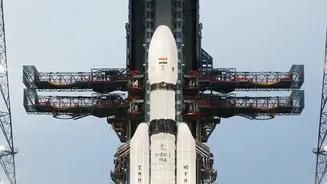
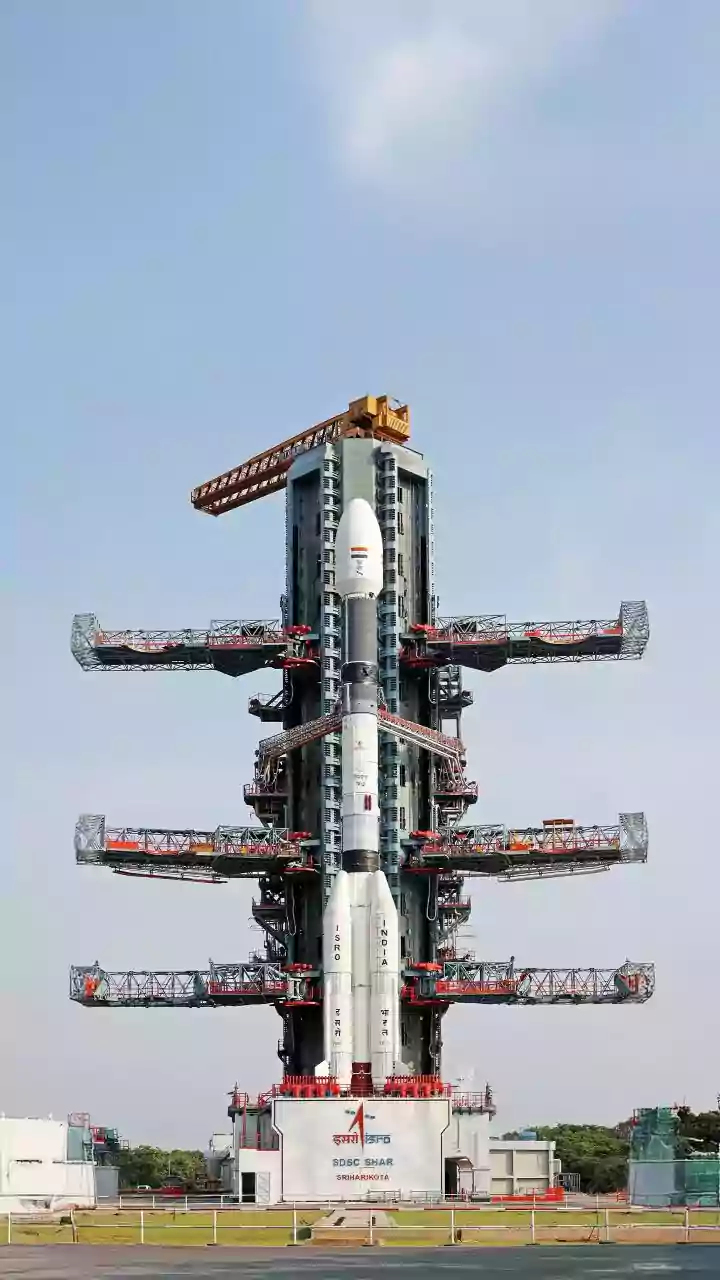
In engineering, and especially in spaceflight, a single success can sometimes be a fluke. Repeated testing is crucial to build statistical confidence. By performing the same test multiple times, engineers can identify subtle weaknesses, understand performance variations, and ensure the system is reliable across a range of conditions. It also helps them define the system's limits. The Gaganyaan programme will see a series of uncrewed test flights before the first crewed mission. The first, Gaganyaan-1 (G1), will carry the humanoid robot 'Vyommitra' to simulate crew functions and test the life support systems. These uncrewed missions are full dress rehearsals, designed to prove that every system, from the human-rated LVM3 rocket to the ground control network, works together as planned.
Building a Culture of Safety
Beyond the hardware, Gaganyaan is about building a deep-rooted culture of safety. This includes rigorous training for the four astronaut-designates, who have completed generic training in Russia and are now undergoing mission-specific modules in Bengaluru. It also involves exhaustive safety reviews at every stage of development. These reviews bring together experts from various fields to scrutinize every design, every test result, and every procedure, hunting for any potential risk. This slow, methodical, and often repetitive process is not a sign of delay. Instead, it is the hallmark of a mature and responsible space agency that understands the immense responsibility of sending its citizens into orbit. It's how India will not only join the elite club of nations with human spaceflight capability but do so with confidence and integrity.