






First, What Are Phages?
Before diving into the artificial intelligence aspect, it’s important to understand what a bacteriophage, or 'phage' for short, actually is. Think of them as nature’s own targeted missiles. Phages are viruses, but they don’t infect humans; their sole
purpose is to infect and destroy bacteria. They are the most abundant biological entities on Earth, constantly keeping bacterial populations in check. For decades, scientists have been interested in using them for 'phage therapy'—unleashing these natural bacteria-killers on infections in our bodies. This is especially relevant today with the growing crisis of antibiotic-resistant bacteria, or 'superbugs', which are rendering our most reliable medicines useless. Phages offer a highly specific alternative, targeting only the harmful bacteria without wiping out the beneficial microbes in our gut like broad-spectrum antibiotics do.
From Digital Code to Living Virus
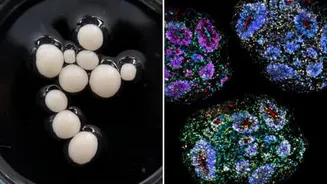
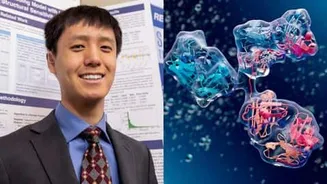
The problem with traditional phage therapy has always been the slow, painstaking process of finding the right natural phage for a specific infection. This is where the recent breakthrough from researchers at Stanford University changes everything. They employed a generative AI model named Evo 2, which functions much like the large language models that generate text. Instead of learning grammar and sentences, Evo 2 was trained on the genetic code of thousands of existing viruses. It learned the 'language' of viral DNA. The researchers then tasked the AI with writing entirely new, complete genomes for phages designed to attack the bacterium E. coli. This process generated thousands of potential genetic blueprints. The next step was to bridge the gap from digital to physical. The scientists selected the most promising designs, synthesized their DNA chemically, and introduced that genetic code into bacteria, effectively 'booting up' the AI-designed viruses in the lab.
The Ultimate Test: Did It Actually Work?
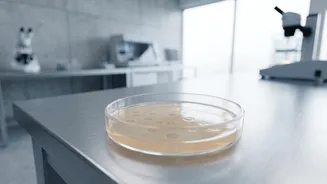
This is the crucial step of lab validation. An AI can generate endless designs on a computer, but they are meaningless until they are proven to function in the real world. Of the nearly 300 synthetic genomes the team chose to build and test, 16 of them successfully came to life. They were viable, self-replicating viruses that behaved as intended: they infected and killed E. coli. This was the first time generative AI has been used to create a functional, complete genome for an organism from scratch. Even more impressively, some of the AI's creations were more potent than the natural virus they were modeled on. Crucially, the researchers created a cocktail of their new phages and tested it against strains of E. coli that had evolved resistance to natural phages. The AI-designed viruses overcame this resistance, demonstrating a powerful new path forward.
Why This Is a Game-Changer for Science
The significance of this experiment goes far beyond just creating a few new viruses. It represents a fundamental shift in how we approach biology. We are moving from a science of discovery, where we find what nature has already made, to a science of creation, where we design biological systems to solve specific problems. For medicine, it means the potential to dramatically accelerate the development of therapies for antibiotic-resistant infections. Instead of searching for a needle in a haystack, doctors could one day have phages designed and customized to fight a patient's specific infection. This success in lab validation proves that AI-enabled biological design is no longer a theoretical concept. It is a practical tool that can generate functional, useful living systems, opening doors for everything from new medicines and vaccines to novel enzymes that could capture carbon or break down plastics.
The Road Ahead and the Ethical Questions
Of course, this powerful capability comes with significant responsibility. The ability to design and create novel viruses, even beneficial ones, immediately raises serious safety and biosecurity concerns. If an AI can be taught to create a virus that kills bacteria, what guardrails are needed to prevent it from being used to design one that could harm humans? The Stanford researchers are acutely aware of this dual-use dilemma and explicitly called for the scientific community to engage with safety and security professionals when undertaking such work. Experts in the field note that while the technology to design these viruses now exists, the global governance and regulations to safely manage it do not yet. As this technology develops, an open and urgent conversation about ethics, containment, and oversight will be just as important as the scientific research itself.