



A Novel Solution to a Global Problem
Plastic pollution is one of the most persistent environmental challenges, with polyethylene terephthalate (PET), the material used in drink bottles, being a major contributor. Simultaneously, experts predict a significant rise in global food demand in the coming
decades. A team of researchers at Southern Illinois University (SIU) Carbondale decided to tackle these two issues as one. Their reasoning was simple yet profound: plastic is made of carbon, and food is made of carbon. This led them to explore whether the carbon locked away in plastic waste could become a feedstock for food production. The project, which was presented at the American Chemical Society's Fall 2026 meeting, initially started as a plastic upcycling initiative before evolving to focus on creating edible products.
The Science: From Bottle to Batter
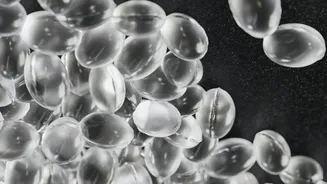
The process doesn't involve grinding up plastic and mixing it into dough. Instead, it's a sophisticated, multi-step biological transformation. First, the PET plastic, along with agricultural waste like corn stalks, is broken down. This is achieved through a process called oxidative hydrothermal dissolution, which uses water, oxygen, high temperatures, and pressure to deconstruct the tough plastic into smaller, water-soluble molecules that microbes can access. These carbon-rich fragments are then fed to genetically engineered yeast. Think of the microbes as tiny, efficient factories. The team, led by Associate Professor Lahiru Jayakody, programmed several yeast strains, including common baker's yeast, to consume these molecules and convert them into proteins, fats, and other nutrients.
Creating the µBite Cookie
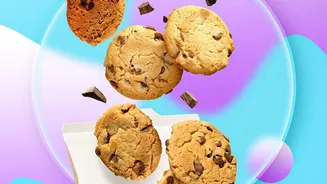
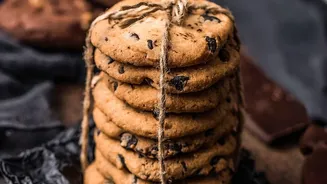
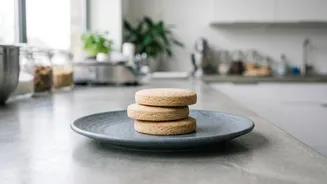
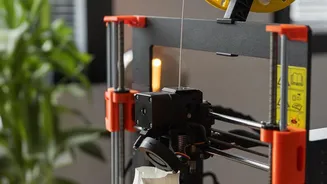
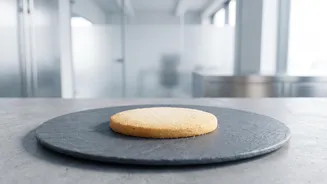
The resulting microbial biomass forms the base of the food product. To make it more appealing, the scientists engineered different yeast strains to produce specific qualities. One was designed to create vanillin, the compound responsible for vanilla's aroma and flavor, from the plant-based waste. Another strain can convert a molecule from the PET plastic into beta-carotene, the pigment that gives carrots their color and a precursor to vitamin A. This nutrient-rich paste is then combined with other ingredients like starch and fiber, loaded into a 3D printer, and extruded into a consistent cookie shape. This prototype is called a "µBite," pronounced "microbite." The project was partly funded by NASA's Deep Space Food Challenge, which sought innovative ways to feed astronauts on long missions by using minimal resources and recycling waste.
Challenges on the Menu
While the science is promising, a cookie made from plastic faces significant hurdles before it could ever reach a plate. The most obvious is public perception and safety. Though researchers say a rigorous process ensures the final product is safe, the idea of eating something that originated as a plastic bottle requires a major psychological leap for consumers. Currently, the team is awaiting institutional approval for human taste tests, although initial smell tests have been positive. Scalability and cost are also major factors. The complex, energy-intensive process of breaking down the plastic makes it expensive for mass production at this stage. The technology is still experimental and years away from any potential commercial application. For now, the µBite is a powerful proof-of-concept, demonstrating a potential closed-loop system where waste is transformed into a valuable resource.