








India's Arteries of Progress
Intercity corridors are the circulatory system of a nation's economy. They connect hubs of production with centers of consumption, and administrative capitals with industrial powerhouses. The efficiency of these routes often dictates the pace of regional
development, influencing everything from logistics and trade to real estate prices and daily commutes. Two such corridors, though separated by a thousand kilometres, stand out as powerful case studies: the established Ahmedabad-Vadodara route in Gujarat and the rapidly transforming Kanpur-Lucknow belt in Uttar Pradesh. Both are critical to their respective state economies, but they represent different stages of India’s infrastructure journey.
Gujarat's Economic Spine: Ahmedabad-Vadodara
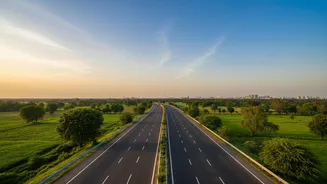
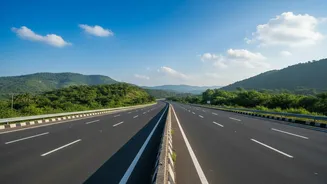
The connection between Ahmedabad, Gujarat’s commercial capital, and Vadodara, its industrial and cultural hub, has long been one of India’s most vital economic passages. This corridor is anchored by the National Expressway 1 (NE-1), which opened in the early 2000s and slashed travel time between the two cities to about an hour. This wasn't just about a faster drive; it was a catalyst. The expressway effectively merged the economies of two major cities, facilitating a seamless flow of goods and people. The corridor is home to a dense concentration of industries, including petrochemicals, textiles, pharmaceuticals, and manufacturing, forming the backbone of Gujarat's economy.
A Mature and Multimodal Corridor
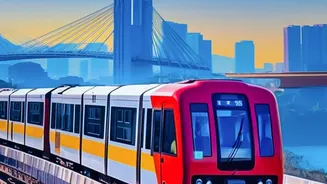
What makes the Ahmedabad-Vadodara route so significant is its maturity and multimodal nature. For decades, it has been a hive of activity, not just on the road but also on the rails, with numerous intercity trains serving a massive population of daily commuters. The NE-1 itself was a pioneering project for the National Highways Authority of India (NHAI) and set a benchmark for future expressways in the country. Today, this corridor is part of the larger Delhi-Mumbai Industrial Corridor (DMIC) and is set to integrate the Mumbai-Ahmedabad high-speed rail line, further cementing its role as a futuristic, multi-layered transport axis. This integration of road, rail, and freight infrastructure showcases a well-developed model of economic geography.
The Heartland's New Lifeline: Kanpur-Lucknow
In Uttar Pradesh, the story of the Kanpur-Lucknow corridor is one of transformation and future potential. This route connects Lucknow, the state's administrative and political capital, with Kanpur, its largest industrial city known for leather and textiles. For years, the journey between these two cities, though only about 90 kilometres, was hampered by congested highways. The economic logic for a high-speed link was always strong, given the massive volume of daily commuters for business, education, and administrative work. The development of the new Kanpur-Lucknow Expressway (NE-6) is the state's answer to this long-standing need.
An Expressway Driving Future Growth
The Kanpur-Lucknow Expressway, a six-lane, access-controlled highway, promises to reduce travel time from nearly two hours to under 45 minutes. This development is seen as a major catalyst for the region. Experts predict it will create a vibrant economic belt, boosting the startup ecosystem, revitalizing industry, and creating new opportunities in logistics, education, and real estate. The project is a cornerstone of UP's push for enhanced connectivity, aiming to create an economic environment that can attract investment and generate employment. However, its recent inauguration in mid-2026 has been marred by reports of road damage and sinking after monsoon rains, raising questions about construction quality that authorities are investigating.
Different Eras, Shared Ambition
Comparing the two corridors reveals a story of India's development arc. The Ahmedabad-Vadodara route is a testament to the long-term benefits of early infrastructure investment, a mature corridor that has been fueling a state's economy for over two decades. The Kanpur-Lucknow corridor represents the next wave of this development, a project of immense strategic importance that is just beginning its journey. While one is an established engine of growth, the other is a powerful engine in the making. Both highlight a shared ambition: leveraging high-speed connectivity to unlock regional economic potential, integrate major urban centres, and build a foundation for future prosperity.