









The Cosmic Battle of Rahu and Ketu
The story behind eclipse-related customs begins with the Samudra Manthan, or the churning of the cosmic ocean of milk. According to the Puranas, the Devas (gods) and Asuras (demons) worked together to produce Amrit, the nectar of immortality. When the nectar emerged,
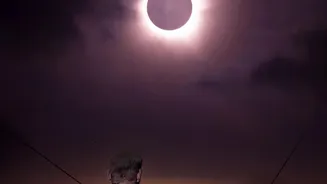
Lord Vishnu took the form of a beautiful woman, Mohini, to distribute it only among the Devas. However, an Asura named Svarbhanu disguised himself and managed to take a sip. The Sun god (Surya) and the Moon god (Chandra) noticed the deception and alerted Vishnu, who immediately severed Svarbhanu's head with his Sudarshana Chakra. Because the nectar had touched his lips, both parts of the demon became immortal. The head became known as Rahu and the headless body as Ketu. In an act of eternal vengeance, Rahu is said to periodically swallow the sun or moon, causing an eclipse. Since Rahu has no body, the celestial body eventually emerges, which is why the eclipse is temporary.
The Concept of Sutak Kaal
Central to eclipse rituals is the concept of 'Sutak Kaal', an inauspicious period observed before and during the grahan. According to Hindu beliefs, the atmosphere becomes contaminated with negative or disturbed energies during this time. This period of ritual impurity begins 12 hours before a solar eclipse (Surya Grahan) and 9 hours before a lunar eclipse (Chandra Grahan). These restrictions, however, are traditionally applicable only in regions where the eclipse is visible. During Sutak, activities like cooking, eating, drinking, and starting new ventures are discouraged to avoid the harmful effects of this atmospheric disturbance.
Why Fasting is Recommended
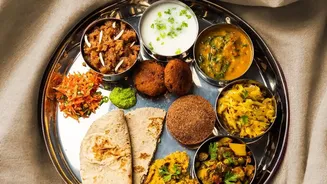
The primary reason for avoiding food and water during an eclipse is the belief that these items can absorb the negative energies prevalent in the environment. Food prepared before the Sutak period is often protected by placing Tulsi (holy basil) leaves or Kusha grass in it, as these are believed to have purifying properties that shield the food. It's believed that consuming food prepared or eaten during the eclipse can introduce these disturbances into the body, potentially leading to indigestion or illness. Some scriptures like the Skanda Purana suggest that consuming food during this time can lead to poor health. For this reason, many people fast throughout the Sutak period and the eclipse itself, breaking their fast only after taking a ritual bath once the grahan is over.
Restrictions on Viewing and Other Activities
Beyond just eating, many other activities are also avoided. Watching the eclipse with the naked eye is discouraged, a belief that aligns with modern science's warnings about potential retinal damage from looking directly at the sun. Spiritually, looking at the eclipse is considered inauspicious. Pregnant women, in particular, are often advised to stay indoors to protect the unborn child from the believed malefic effects of the eclipse. Other activities typically avoided include sleeping, cutting hair or nails, using sharp objects, and engaging in sexual activity. The period is instead seen as a spiritually potent time, best used for quiet reflection, meditation, and chanting mantras, which are believed to have amplified positive effects.
Post-Eclipse Cleansing Rituals
Once the eclipse has ended, a series of cleansing rituals are performed to mark the return to normalcy. The most common practice is taking a bath, often with the clothes one was wearing, to purify the body. Homes are also cleansed, sometimes by sprinkling Gangajal (holy water from the Ganges). It is advised to discard any food that was left unprotected during the Sutak period and to prepare fresh meals. Another significant post-eclipse tradition is giving Daan (charity), such as donating food grains or clothes to the needy. This act of giving is believed to wash away any negative impacts and earn spiritual merit.