






The Heart of the Problem in Space
On Earth, your heart constantly works against gravity to pump blood throughout your body. In the microgravity of space, this task becomes much easier. With less work to do, the heart muscle, like any other muscle, can begin to weaken and shrink — a process
known as cardiac atrophy. For decades, scientists have worried that this deconditioning could pose a serious threat to astronauts, especially on a long-duration mission to Mars. A weakened heart might struggle to readapt to gravity upon arrival, leading to fainting or more severe cardiovascular events at a critical moment in the mission. Early space missions confirmed these concerns, showing astronauts experienced issues like low blood pressure upon returning to Earth.
A Reassuring Signal from Orbit
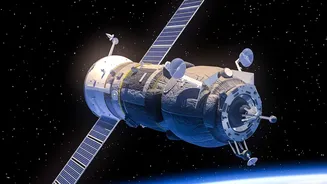
This is where a recent six-month study of astronauts aboard the International Space Station (ISS) provides some 'reassuring' news. Researchers used advanced imaging techniques to track the heart health of 13 astronauts before, during, and after their missions. The study, published in the journal Circulation, found that while the heart does change shape and adapt to microgravity, it did not show signs of losing muscle mass or function in a dangerous way. Essentially, the heart adapted to its new environment without becoming pathologically weak, and the changes stabilised during the mission, returning to normal after the astronauts were back on Earth. This suggests the human heart is more resilient to long-term spaceflight than previously feared, a major positive sign for a future Mars journey.
The Not-So-Secret Weapon: Intense Exercise
The reassuring findings do not come from a passive adaptation, however. The key to this cardiac resilience is the intense and highly structured exercise regimen astronauts follow. On the ISS, crew members exercise for about two to two-and-a-half hours every day, six days a week. This isn't a casual workout; it's a medical necessity. They use a specialised treadmill, a stationary bike, and an advanced resistance machine that allows them to perform exercises like squats and deadlifts in weightlessness. This daily routine is specifically designed to put stress on the cardiovascular system and skeleton, mimicking the effects of gravity and forcing the heart and muscles to stay strong. The study's authors made it clear that this rigorous exercise is what prevented significant cardiac atrophy.
Important Limits and Lingering Questions
While the study is good news, it comes with significant limitations. First, the ISS orbits within Earth's protective magnetic field, which shields astronauts from the worst of deep space radiation. A trip to Mars would expose a crew to much higher levels of galactic cosmic rays, which are known to damage the cardiovascular system and accelerate ageing-like processes. Second, the sample size of 13 astronauts is small. While the results are promising, they need to be replicated with more subjects. Finally, a mission to Mars will be much longer than six months — potentially lasting up to three years — and will take place in a more confined spacecraft, making the current ISS exercise regimen potentially difficult to replicate. Researchers are still working to understand the combined effects of microgravity and high radiation over such extended periods.