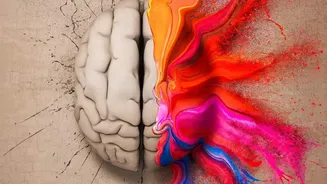








What Are Brain Representations?
At its core, a memory isn't a single file stored in a specific brain folder. Instead, it is a unique pattern of activated neurons, known as a 'brain representation' or 'engram'. Think of it like a constellation of stars; the individual stars (neurons)
can be part of many different constellations, but the specific pattern they form makes you see a hunter or a bear. When you recall an experience, your brain reactivates that specific pattern. Scientists have long understood that these connections, or synapses, between neurons can be strengthened or weakened over time, making a particular pattern more or less likely to be reactivated. This process, called synaptic plasticity, is fundamental to how we learn and remember.
The Brain's 'Memory Switchboard'
Recent research from NYU Langone Health has added another layer of understanding to this process, discovering what they call a 'memory switchboard' within the hippocampus, a key area for memory. Their findings suggest that the brain can reuse the same neurons to store different memories without mixing them up or overwriting older ones. The study, conducted on mice, revealed that a specific subset of neurons acts as a hub, managing incoming and outgoing signals. When these cells receive information, they fire in one pattern, and when they send information out, they use a different pattern. This allows the brain to keep memories distinct and organized, even when using the same cellular hardware. This mechanism helps explain how memory can be both flexible and stable, allowing us to continuously learn from new experiences while protecting cherished older memories.
From Fleeting Moments to Lasting Memories
But how does the brain decide which experiences are worth keeping? Research from the Stowers Institute has identified a specific mechanism that helps turn a fleeting moment into an unforgettable memory. Their work showed that the nervous system can deliberately use proteins called amyloids, often associated with neurodegenerative diseases, in a functional way to create stable, long-term memories. A specific 'chaperone' protein helps another protein change its shape to form these functional amyloids at a specific time and place in response to an experience. Another recent study from the University of Oxford found that the brain uses short bursts of slow-wave brain rhythms, about two beats per second, to coordinate activity across different memory regions during learning. The strength of this synchronized reactivation during rest periods can even predict how well a person will remember the information later.
Why This Research Matters
These breakthroughs are more than just academic curiosities; they have profound implications for human health. Understanding how memories are formed, organized, and stabilized offers a new window into what goes wrong in memory disorders like Alzheimer's disease. For example, scientists are exploring how Alzheimer's might affect the structure of engram cells. By pinpointing the specific circuits and molecular processes involved in healthy memory, researchers can identify new targets for therapies. This could one day lead to treatments that not only slow memory decline but potentially help restore lost function. Furthermore, these findings could inform the development of more advanced artificial intelligence, creating systems that can learn and adapt in a more human-like way.