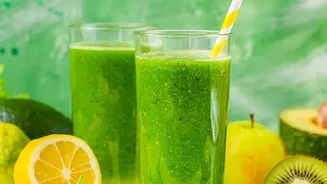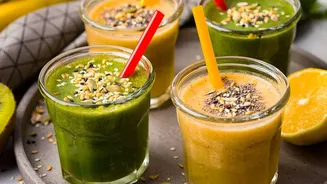




The Problem with a Fruit-Only Smoothie
When you blend fruit, its natural sugars are released from their fibrous cell walls, becoming 'free sugars' similar to those in honey or table sugar. This means your body absorbs them very quickly, which can lead to a rapid spike in blood sugar followed
by an inevitable crash. That crash often leaves you feeling hungry and tired shortly after your meal, which is the opposite of what a good meal should do. While fruits are packed with vitamins and minerals, relying on them alone means you're consuming a beverage that is high in sugar without the other macronutrients that constitute a balanced meal. Liquid calories are also less satisfying than solid foods, which can lead to consuming more calories overall.
Power Up with Protein
Protein is arguably the most crucial element for turning a snack-like smoothie into a substantial meal. It is essential for building and repairing tissues, but in the context of a meal, its main role is providing satiety — the feeling of fullness and satisfaction. A meal replacement should contain at least 10-20 grams of protein to be effective. Adding a quality protein source slows down digestion, helping to curb hunger for hours. Great options to blend into your smoothie include Greek yogurt, which can offer 15-20 grams of protein per cup, or a scoop of your favorite whey or plant-based protein powder. Other effective, whole-food sources include silken tofu, cottage cheese, or even nut butters.
Incorporate Healthy Fats
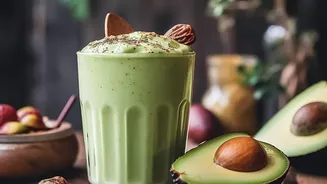
Fat is not the enemy; in fact, healthy fats are vital for a balanced diet. They help your body absorb essential vitamins, regulate hormones, and provide sustained energy. Adding a source of healthy fat is key to making your smoothie creamy and ensuring it has staying power, preventing you from feeling hungry again too soon. Just one or two tablespoons are needed for a single-serving smoothie. Fantastic sources of healthy fats include half an avocado, which also adds a wonderfully creamy texture, or a tablespoon of nut butter like almond or peanut butter. Seeds are another powerhouse option; chia, flax, and hemp seeds not only provide healthy omega-3 fatty acids but also contribute to the smoothie's fiber content.
Fill Up with Fiber
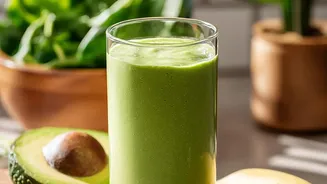
Fiber is the unsung hero of a great meal-replacement smoothie. It aids in digestion, helps you feel full, and plays a crucial role in preventing the blood sugar spikes associated with fruit-heavy drinks. While fruits and vegetables contain fiber, blending can break some of it down. To ensure your smoothie is truly filling, it’s wise to add an extra source. Aim for at least 5-7 grams of fiber in your shake. You can easily boost the fiber content by adding a handful of leafy greens like spinach or kale, which are also packed with vitamins. Rolled oats are another excellent addition that thickens the smoothie and adds complex carbohydrates for sustained energy. For a concentrated fiber boost, a tablespoon of psyllium husk, chia seeds, or ground flaxseed works wonders.
Building Your Balanced Smoothie
Creating a nutritionally complete smoothie is as simple as following a basic template. Think of it as building a balanced plate, just in a glass. Start with a liquid base like water or unsweetened plant-based milk. Then, add your core components: a source of protein, a serving of healthy fats, and a boost of fiber. Finally, add your fruits and vegetables for flavor, vitamins, and minerals. A good starting formula is one cup of liquid, one serving of protein (like a scoop of powder or a portion of Greek yogurt), one serving of healthy fat (like a tablespoon of chia seeds or almond butter), and one cup of fruit and/or vegetables. This balanced approach ensures you get a meal that provides energy, keeps you satisfied, and nourishes your body properly.