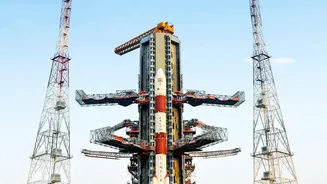





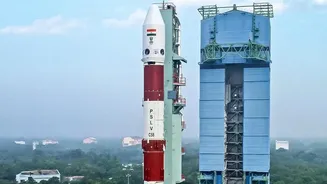
A New Eye Watching From Above
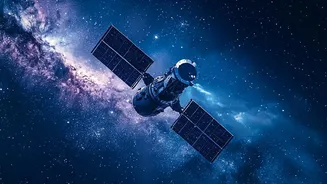
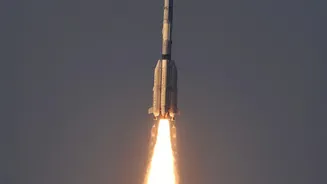
The payload at the heart of this mission, EOS-05, is an advanced Earth-imaging satellite. Unlike many observation satellites that circle the Earth in lower orbits, EOS-05 is destined for a geosynchronous orbit approximately 36,000 kilometres high. From
this vantage point, it can maintain a constant watch over the Indian subcontinent. This capability is a game-changer, allowing for near real-time monitoring of weather patterns, natural disasters like cyclones and floods, and agricultural health across the nation. For a country with a vast and varied landscape, having a dedicated eye in the sky provides invaluable data for disaster management, urban planning, and national security, offering the ability to see large-scale changes as they happen.
The Shadow of a Past Failure
This success is particularly sweet because it comes after a significant setback. In August 2021, the GSLV-F10 mission, carrying the similar EOS-03 satellite, failed just minutes after a seemingly perfect lift-off. The first two stages of the rocket performed flawlessly, but the crucial third stage—the indigenously developed Cryogenic Upper Stage (CUS)—failed to ignite. An investigation later revealed the cause: a minor leak in a valve led to insufficient pressure in the liquid hydrogen fuel tank, preventing the engine's turbopump from functioning correctly. The rocket and its valuable satellite were lost, casting a shadow over ISRO's ambitious launch calendar and raising questions about the reliability of its most powerful launcher.
The 'Naughty Boy' Comes Good
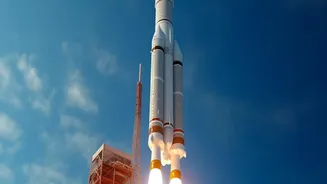
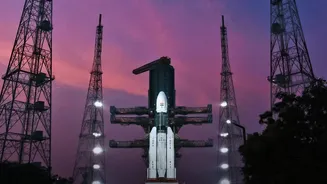
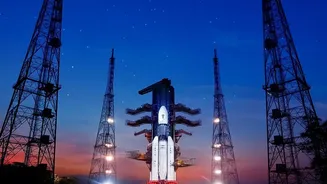
The Geosynchronous Satellite Launch Vehicle (GSLV) has long been nicknamed ISRO's 'naughty boy' due to its checkered early history. Unlike its smaller, remarkably reliable sibling, the PSLV (Polar Satellite Launch Vehicle), the GSLV has faced developmental hurdles, particularly with its complex cryogenic upper stage. This stage, which uses super-cooled liquid hydrogen and oxygen as propellants, is notoriously difficult to master but essential for delivering heavy payloads to high-energy orbits. Mastering this technology is a mark of a mature space-faring nation, as it allows for self-reliance in launching heavy communication satellites and undertaking deep-space missions. The failure of the F10 mission prompted a thorough review, with ISRO engineers working meticulously to diagnose and implement corrective measures to ensure the pressure leak would not happen again. The successful flight of EOS-05 is a direct result of that painstaking effort, proving the rocket's robustness.
Unlocking India's Future in Space
With the GSLV now back in action, ISRO can confidently move forward with some of its most high-profile projects. The success restores faith in the vehicle that is critical for launching heavier navigation and communication satellites, reducing India's dependence on foreign launch providers. More importantly, modified and more powerful versions of the GSLV, like the LVM3 (formerly GSLV Mk III), are the designated launch vehicles for the Gaganyaan mission—India's ambitious program to send astronauts into space. Ensuring the reliability of the underlying technology, especially the cryogenic stage, is paramount before putting human lives on the line. This launch is a significant step in validating the systems required for that historic endeavor, as well as for future interplanetary missions like the Venus orbiter and lunar exploration projects.