



Beyond Sci-Fi: What Are Orbital Weapons?
When we think of space weapons, our minds often jump to images from science fiction. The reality in 2026 is less about dramatic laser battles and more about subtle, strategic threats. Orbital weapons are systems placed in or transiting through space designed
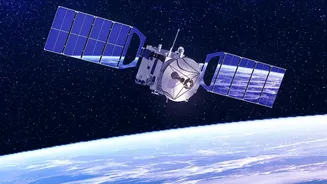
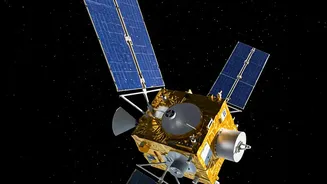
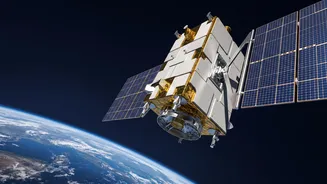
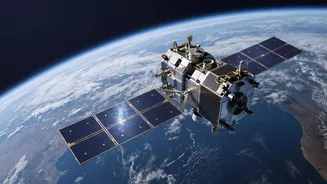
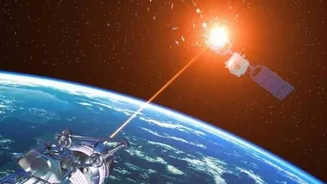
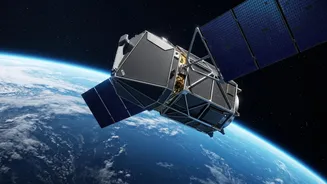
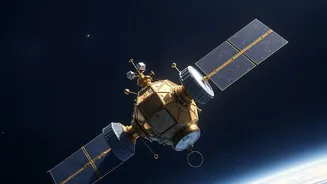
to disrupt, damage, or destroy targets on Earth or other assets in orbit. These aren't just missiles. They include co-orbital anti-satellite weapons, sometimes called 'inspector' or 'killer' satellites, which can manoeuvre close to another country's satellite to disable or destroy it. Other forms include ground-based lasers that can dazzle or permanently blind satellite sensors, and jammers that interfere with critical communication signals. A particularly concerning technology is the Fractional Orbital Bombardment System (FOBS), a concept from the Cold War that has been modernised. A FOBS launches a payload into a low Earth orbit, allowing it to approach a target from an unexpected trajectory, such as over the South Pole, bypassing traditional missile defence radars. China's reported test of such a system has raised significant global concern.
The New Space Race: Key Players
The contest for space superiority is primarily a three-way race between the United States, China, and Russia. On September 14, 2026, the U.S. publicly confirmed for the first time that it has deployed 'on-orbit space control weapons,' a major shift in its declared policy, intended to deter adversaries. The U.S. Space Force is actively developing both defensive and offensive capabilities, framing them as a necessary response to threats. China has made staggering progress, developing a suite of counter-space capabilities, including ground-based ASAT missiles, co-orbital systems, and directed-energy weapons. Its secretive spaceplane has demonstrated advanced manoeuvring, and researchers are exploring technologies for capturing or refueling other satellites. Russia continues to modernise its Soviet-era space warfare programs. It has tested its own ASAT missiles, creating a large debris field in a 2021 test, and is reportedly developing a nuclear-armed space-based weapon designed to threaten entire satellite constellations.
The Lawless Frontier
The international rules governing space are dangerously outdated. The 1967 Outer Space Treaty, the foundational legal document, prohibits placing weapons of mass destruction (WMDs) in orbit but contains significant loopholes. It does not explicitly ban conventional weapons or ground-launched anti-satellite missiles. The definition of 'peaceful purposes' remains hotly debated, with some nations arguing it means 'non-military' while others interpret it as 'non-aggressive'. For years, India has advocated for a legally binding treaty on the Prevention of an Arms Race in Outer Space (PAROS) at the United Nations, but these discussions have stalled amid geopolitical gridlock. This lack of clear rules and verification measures has created a high-risk environment where miscalculation could lead to rapid escalation.
India's Deterrence and Defence
India's official stance is clear: it is opposed to the weaponization of space and is not participating in an arms race. However, in a contested domain, deterrence is key. In March 2019, India successfully conducted 'Mission Shakti,' an anti-satellite (ASAT) missile test that destroyed one of its own satellites in a low orbit. This test made India the fourth country to demonstrate such a capability, sending a powerful message that it can defend its space assets. This is crucial as India's economy and military are increasingly reliant on its satellite network for communication, navigation (NavIC), intelligence, surveillance, and reconnaissance. To enhance its capabilities, India established the Defence Space Agency (DSA) in 2019 to operate military space assets and the Defence Space Research Agency (DSRA) to develop new technologies. A major focus is on Space Situational Awareness (SSA) — the ability to track objects and threats in orbit. Projects like NETRA (Network for Space Object Tracking and Analysis) are designed to give India an independent capacity to monitor its assets and the space environment.