





A World That Should Be Frozen Solid
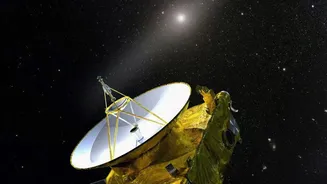
When the New Horizons spacecraft flew past Pluto in 2015, it sent back images that shattered long-held beliefs. Small, distant, and frigidly cold, Pluto was expected to be a largely inert, crater-pocked ice ball. Instead, the pictures revealed a vibrant
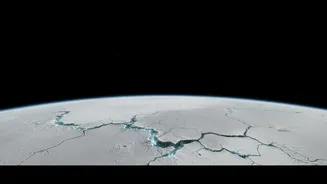
and dynamic landscape that suggested recent, and possibly ongoing, geological activity. This was a profound surprise, as Pluto lacks the gravitational pull from a giant planet that typically heats icy moons and drives their geology. The data was so rich that even today, more than a decade later, scientists are still making groundbreaking discoveries by re-examining the trove of images. These fresh analyses confirm that Pluto is one of the most geologically fascinating bodies in our solar system.
The Beating Heart of a Dwarf Planet
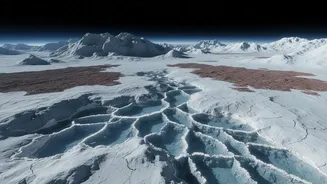
The most prominent feature is a vast, heart-shaped basin of frozen nitrogen called Sputnik Planitia, which is larger than Texas and Oklahoma combined. This is not a static sheet of ice. The surface is broken into city-sized polygons that are signs of slow-moving convection, similar to the wax in a lava lamp. The ice is constantly, slowly churning, driven by Pluto's faint internal heat. This process renews the surface, which is why there are virtually no impact craters in the area, suggesting the surface is no more than 10 million years old—a blink of an eye in geological terms. Recent studies analyzing dark streaks along the cell boundaries suggest that liquid nitrogen may well up from deep below the glacier, temporarily wetting the surface before refreezing.
Volcanoes That Spew Ice
Perhaps the most startling discovery is the existence of enormous cryovolcanoes. One of the largest, Wright Mons, is a mountain about 4 kilometers high and 150 kilometers wide. Unlike volcanoes on Earth that erupt molten rock, cryovolcanoes erupt a slushy mix of water, ammonia, or methane. The lumpy, hummocky terrain around these features is unlike anything else seen in the solar system and appears to have been formed by repeated eruptions. The near-total lack of craters on these formations indicates they were active relatively recently, forcing scientists to reconsider how a small world so far from the sun could generate enough heat to power such massive geological events.
Skyscrapers of Water Ice
Another geological puzzle is Pluto's towering mountain ranges, some of which are as tall as the Rocky Mountains. These peaks, like the Norgay Montes, which rise up to 3.5 kilometers, are not made of the nitrogen or methane ice that covers much of the surface. Those ices are too soft to support such massive structures. Instead, scientists believe these mountains are composed of water ice. At Pluto’s incredibly cold temperatures of around minus 230 degrees Celsius, water ice becomes as hard as rock and forms the planet's bedrock. In some areas, these massive blocks of water-ice bedrock appear to be floating on a denser, softer sea of frozen nitrogen, like giant icebergs.