





The Power of the Mother Plant
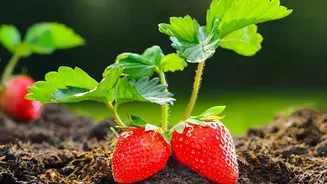
At the heart of this incredible multiplication is the ‘mother plant’. In strawberry cultivation, this is the original, high-quality plant that serves as the genetic blueprint for future generations. These aren't just any strawberry plants; they are typically
chosen for their superior genetics. For commercial growers, the focus is either on fruit production or propagation, not both, as each requires significant energy from the plant. When grown for propagation, the mother plant’s energy is channelled away from producing fruit and instead directed towards creating new plants. This is done by pinching off any flowers that appear, ensuring all its resources go into vegetative growth. This specialisation is the first step in a highly efficient, natural cloning process that allows farmers to rapidly expand their crop.
Nature’s Cloning Machine: Runners
The secret to the strawberry’s multiplication prowess lies in its ability to produce ‘runners’, also known as stolons. These are long, leafless stems that shoot out from the base of the mother plant and grow horizontally across the ground. At various points along these runners, tiny nodes develop into new, miniature strawberry plants, complete with their own leaves and the beginnings of a root system. These new growths are called ‘daughter plants’. As soon as these daughter plants make contact with soil, their roots dig in and they begin to grow independently. Each daughter plant is a genetically identical clone of its mother. A single, vigorous mother plant can send out runners in multiple directions, with some runners producing several daughter plants. While a farmer might limit runners to maintain plant density for fruit production, a single mother plant dedicated to propagation can easily generate dozens of offspring, effectively creating a whole new field from one original source.
Why Go Global? The Case for Imports
The headline’s mention of “imported” plants is key to understanding the scale and success of India’s strawberry industry. While local varieties exist, farmers often import mother plants from nurseries in countries like the United States (specifically California), Italy, and Spain. The reason is simple: these imported cultivars offer superior traits honed over decades of breeding. Varieties such as Chandler, Camarosa, Sweet Charlie, and Nabila are popular choices for Indian farms. They are selected for their high yield, resistance to common diseases, larger and more uniform fruit size, and a longer shelf life, which is crucial for transporting the delicate berries to market. By starting with these robust, high-performance mother plants, Indian farmers can ensure a more predictable and profitable harvest.
From California to Mahabaleshwar
The story of strawberry farming in India was transformed by this very process. The Mahabaleshwar-Panchgani region, which now accounts for about 85% of India's total strawberry production, earned its reputation after a local farmer first imported Chandler seedlings from California in 1992. This experiment kicked off a revolution. Today, a well-established system is in place. Mother saplings are often imported around June and planted in dedicated nurseries in areas like Wai in Maharashtra. These nurseries focus exclusively on cultivating the runners. By September, after the monsoon, the millions of daughter plants that have been propagated are harvested and replanted in the farmers' fields. This two-step process—importing elite mother plants and then using their natural ability to clone themselves—allows the industry to produce a massive, high-quality crop year after year, all starting from a select few plants from abroad.