





A Global Hub for Space Innovation
The International Conference on Spacecraft Mission Operations, or SMOPS-2026, has become a critical gathering for the world's space community. Jointly organized by ISRO, the Astronautical Society of India, and the International Academy of Astronautics,
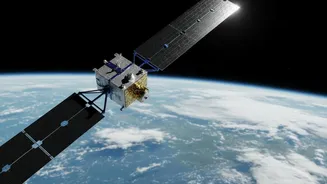
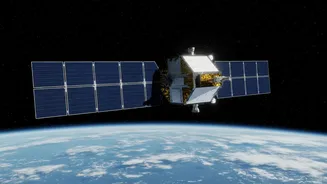
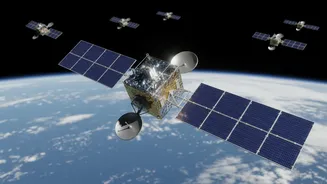
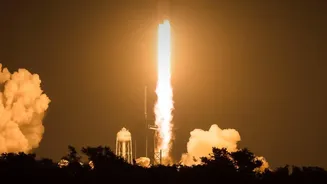
the event brings together space agencies like NASA and ESA, private industry, and academics. The theme this year, “Innovative Operations for Smart and Sustainable Space Mission Management,” has zeroed in on the transformative potential of artificial intelligence. Amid discussions on managing satellite mega-constellations and ambitious human spaceflights, the role of AI in creating more autonomous and efficient missions has emerged as a central point of focus and debate.
What Are Autonomous Mission Operations?
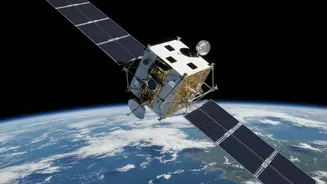
Traditionally, spacecraft rely heavily on human operators on the ground for guidance. This 'human-in-the-loop' model is reliable but slow, especially for deep space missions where communication delays can take many minutes each way. Autonomous operations shift this paradigm. Instead of waiting for commands from Earth, an AI-powered spacecraft could make its own decisions in real-time. This includes navigating treacherous terrain, identifying scientific targets, managing onboard systems, and even performing self-repairs with minimal human intervention. The goal isn't just automation, which follows pre-programmed rules, but true autonomy, where an AI can adapt to unforeseen challenges on its own.
The Promise: Faster, Cheaper, and Bolder Missions
Proponents argue that AI-led autonomy could unlock a new era of space exploration. By reducing the need for constant ground control, agencies could significantly cut long-term operational costs. Missions could be executed faster and more efficiently, as AI can process vast amounts of data and react far quicker than human teams. This capability would enable more ambitious projects, such as exploring hazardous environments on distant moons or planets that are too risky or remote for direct human control. Furthermore, AI can help engineers design and build spacecraft more quickly, shortening development times and allowing smaller teams to tackle complex projects. The ability to operate at a tempo beyond human capacity is seen as a major advantage.
The Hurdles: Trust, Security, and Extreme Environments
Despite the optimism, significant challenges were also highlighted at SMOPS-2026. A primary concern is the reliability and transparency of AI. For critical missions, operators need to trust the AI's decisions, but 'black box' algorithms can be difficult to audit or understand. Spacecraft also face immense physical challenges, including extreme temperatures and cosmic radiation that can damage sensitive electronics and corrupt data, potentially causing AI systems to fail. Cybersecurity is another major risk; a compromised AI could lead to catastrophic mission failure. Finally, there's the high initial cost and complexity of developing and validating AI robust enough for the unforgiving environment of space.
The Road Ahead for India and the World
The discussions at SMOPS-2026 make it clear that while fully autonomous AI pilots are not yet standard, the industry is moving decisively in that direction. For India, which is embarking on its Gaganyaan human spaceflight program and has seen success with AI-assisted missions like Chandrayaan-3, these developments are particularly relevant. The conference served as a platform to foster collaboration needed to chart a safe and sustainable path forward. The consensus is that the future likely involves human-machine synergy, where AI handles routine and high-speed tasks, freeing up human experts to focus on overall strategy and unexpected discoveries. The journey toward autonomous space operations is a marathon, not a sprint, but the starting gun has clearly been fired.