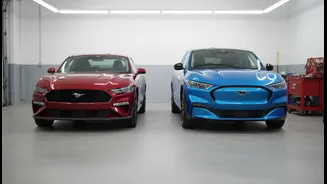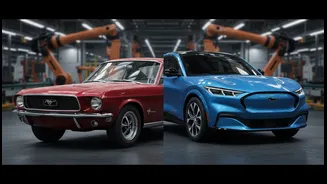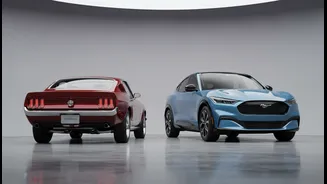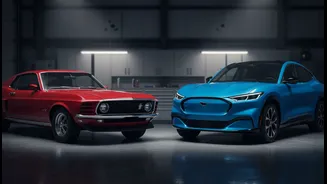



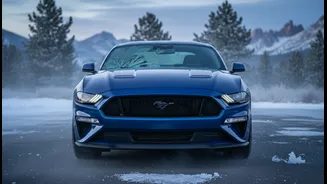
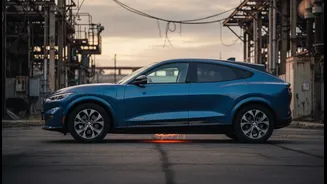


Two Mustangs, Two Different Problems
In a demonstration of how safety issues can span a company's entire product line, Ford has announced separate recalls for its traditional muscle car and its modern electric crossover. The two campaigns affect more than 110,000 vehicles combined and stem
from completely unrelated defects, one involving a conventional component and the other a critical part of an EV drivetrain. This situation puts a spotlight on the engineering challenges present in both legacy and emerging automotive technologies. The recalls were filed with the National Highway Traffic Safety Administration (NHTSA) in early July 2026.
The Classic Muscle: A Wiper Issue
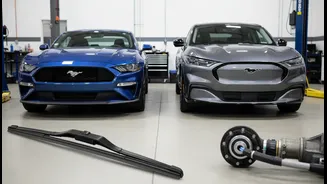
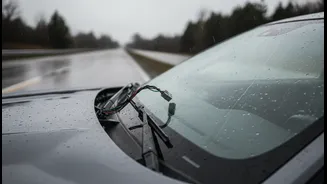
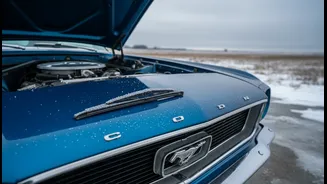
The larger of the two recalls covers approximately 67,842 gasoline-powered Mustangs from the 2024-2026 model years, including the high-performance Mustang GTD. According to documents filed with NHTSA, the issue involves the windshield wiper system. In cold temperatures at or below 32 degrees Fahrenheit, the wipers may only function on their high-speed setting, and the windshield washer system may fail to work at all. This can significantly reduce driver visibility in poor weather conditions, increasing the risk of a crash. Ford has indicated that the problem is caused by a communication fault between the wiper motor and a control module. No accidents or injuries have been reported in relation to this defect.
The Modern EV: A Drivetrain Defect
The second recall affects 42,784 Mustang Mach-E electric SUVs from the 2021-2023 model years equipped with rear-wheel drive. The problem lies with the rear differential pinion shaft, which can fracture due to bending fatigue. A failure of this component can lead to a sudden loss of drive power. Furthermore, it can prevent the vehicle from being securely held in 'Park,' creating a rollaway risk if the electronic parking brake is not engaged. Drivers might see a malfunction indicator light on the dashboard before a failure occurs. While Ford is aware of dozens of warranty claims related to the issue, the company has stated it is not aware of any accidents or injuries.
A Pattern of Proactive Recalls
These latest recalls add to a significant number of safety campaigns initiated by Ford in 2026, making it the most recalled automaker of the year so far. Just before this announcement, Ford recalled over 741,000 trucks and SUVs for a transmission issue that could also lead to a rollaway risk. While the high volume of recalls may seem alarming, the company has framed its actions as part of a proactive strategy to address quality and safety issues early. This approach comes as Ford also celebrated a major win in J.D. Power's 2026 U.S. Initial Quality Study, where it showed the largest year-over-year improvement among mass-market brands.
What Owners Should Do
Ford will notify owners of the affected vehicles by mail. For the gasoline Mustang recall, interim letters are expected to be sent between July 8 and July 15, 2026. For the Mustang Mach-E recall, those notifications are scheduled to go out between July 13 and July 17, 2026. Dealers will perform the necessary repairs free of charge. For the classic Mustang, technicians will inspect and, if necessary, replace the wiper motor. For the Mach-E, dealers will repair or replace the rear differential assembly. Owners can check if their specific vehicle is included in these or any other recall by visiting the NHTSA website or contacting Ford's customer service line.