









What is Charan Sparsh?
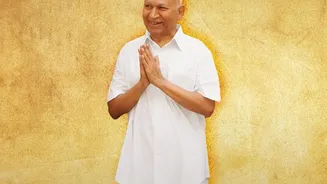
Charan Sparsh, derived from the Sanskrit words 'charan' (feet) and 'sparsh' (touch), is the traditional act of bowing down to touch the feet of elders, gurus, parents, or other respected individuals. The person offering the respect typically bends forward,
touching the elder's feet with their hands, and then touches their own forehead. In return, the elder places a hand on or over their head, offering a blessing. This practice is common on a daily basis, especially in the morning, as well as on important occasions like festivals, birthdays, or before embarking on a new venture.
The Spiritual and Philosophical Core
At its heart, Charan Sparsh is an act of humility and the surrender of one's ego. Ancient Vedic texts, including the Atharva Veda, highlight the importance of respectful greetings. The gesture signifies reverence for the wisdom, experience, and knowledge that the elder embodies. Philosophically, it is believed to facilitate a powerful exchange of energy. By bowing down, the individual becomes a receptive vessel, and when the elder gives their blessing, positive energy and good wishes are thought to flow to the younger person. This transfer is believed to grant strength, intellect, knowledge, and a long life.
A Scientific and Psychological Perspective
Beyond its spiritual dimension, some also point to a scientific basis for the practice. It is suggested that nerves extending from the brain end at the fingertips and feet. When one's fingertips touch the elder's feet, a circuit is supposedly completed, facilitating an energy transfer. The person touching the feet acts as a receptor of energy, while the elder's feet act as the giver. Psychologically, the act of bowing fosters humility and respect, diminishing the ego and creating a positive mental state. For the elder receiving the gesture, it generates feelings of affection and importance, prompting them to give heartfelt blessings. The physical motion itself, especially when done without bending the knees, is also seen as a form of light exercise that improves blood circulation.
Social Etiquette and Modern Practice
As a cultural greeting, Charan Sparsh reinforces social bonds and hierarchies of respect. It is a clear, non-verbal communication of reverence for someone's age, achievements, or spiritual stature. While the tradition remains strong, its practice varies. In some communities, there are specific rules, such as not touching the feet of unmarried girls, as they are sometimes seen as manifestations of the goddess. In today's fast-paced world, the full gesture is sometimes replaced by a simpler nod or a verbal utterance of 'pranam'. However, on significant occasions, many families continue to uphold the full tradition, teaching it to younger generations as a cornerstone of their heritage. It serves as a powerful reminder of the values of humility, gratitude, and interconnectedness in a society that is rapidly modernizing.