

A Galaxy with a Tilt
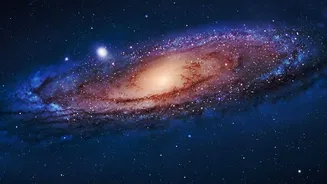
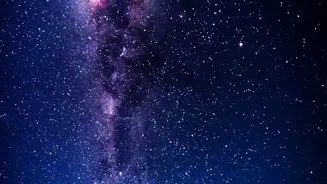
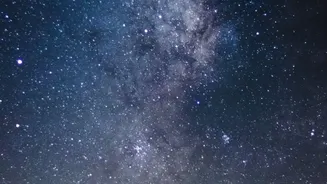
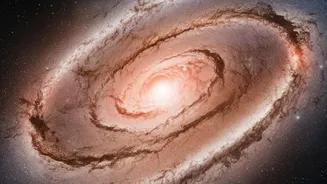
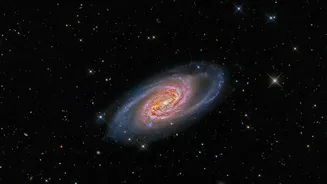
When we think of our galaxy, we picture a flat, spinning disc of stars, gas, and dust. But surrounding this familiar structure is a vast, spherical cloud of older stars known as the stellar halo. For decades, astronomers assumed this halo was mostly uniform.
Recent discoveries, however, have shown that it's lopsided, oblong, and tilted. More bizarrely, many stars within this halo move in strange, elongated orbits, plunging towards the galactic center and then swinging far out again. This peculiar motion was a major cosmic mystery. It suggested that something dramatic happened deep in our galaxy's past to throw so many stars into such unusual paths. It was the primary clue that our galaxy's history was not as peaceful as it appeared.
The Galactic Detective: Gaia
The key to unlocking this mystery came from the European Space Agency's Gaia space telescope. Launched to create an ultra-precise 3D map of the Milky Way, Gaia has been tracking the positions, movements, and distances of more than a billion stars. This incredible dataset allows astronomers to essentially rewind the clock, tracing the paths of stars back through cosmic time. In 2018, an analysis of Gaia's data revealed a distinct group of stars moving in a highly coordinated but strange fashion. They were all on radical, sausage-shaped orbits, a tell-tale sign that they weren't native to the Milky Way. They were immigrants, the scattered remains of another galaxy that had been consumed long ago.
Meet the Gaia Sausage
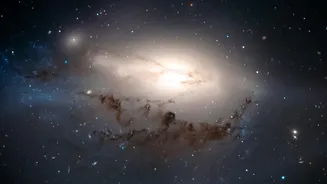
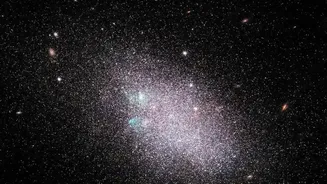
Astronomers nicknamed the intruding galaxy the "Gaia Sausage" because of the distinctive shape of its stars' orbits. It's also known more formally as Gaia-Enceladus. This wasn't a minor fender-bender; it was a collision with a massive dwarf galaxy. Though smaller than the Milky Way, the Gaia Sausage was substantial, containing gas, dark matter, and stars equivalent to more than 10 billion times the mass of our sun. It slammed into our young Milky Way about 10 to 11 billion years ago, long before the Sun and Earth had even formed. This event is now recognised as the last major merger in our galaxy's history and a defining moment in its evolution.
A Collision That Flipped Our World
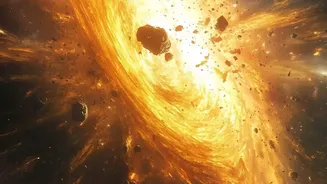
The collision was a head-on impact. The immense gravitational forces of the larger Milky Way tore the Gaia Sausage galaxy to shreds, absorbing its stars and scattering them throughout its own halo. But our galaxy didn't emerge unscathed. Supercomputer simulations run by astronomers at Durham University showed that a head-on collision of this magnitude would have had a profound effect. The chaos unleashed by the merger likely caused the entire disc of the Milky Way to gradually flip over, slowly reorienting itself by more than 90 degrees over hundreds of millions of years. This titanic upheaval fundamentally reshaped our galaxy, creating the central bulge of stars and puffing up the disc. So, when we say the galaxy was knocked "sideways," it refers to this dramatic, large-scale flip in its orientation.
The Scars We See Today
The aftermath of this ancient crash is still visible everywhere. The peculiar, oblong shape of our stellar halo is a direct consequence of this event. The stars from the shredded Gaia Sausage now make up the majority of the Milky Way's inner halo. This discovery does more than just solve the mystery of the halo's strange tilt and the weird orbits of its stars. It provides a new framework for understanding how large galaxies like our own are built over billions of years — not just through quiet star formation, but through violent acts of galactic cannibalism. The very structure of our galactic home is a testament to this violent and formative collision, a story written in the stars themselves.