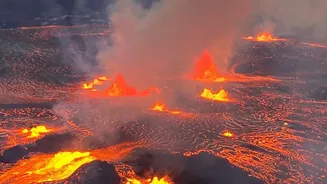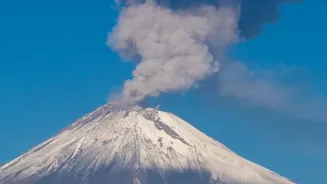




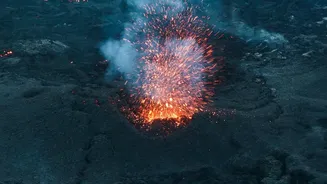
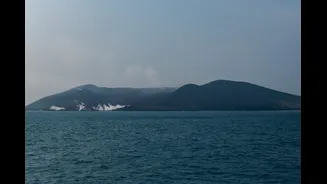
Mount Nyiragongo, DRC (2002): A Humanitarian Crisis
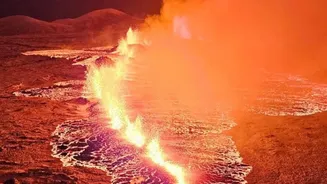
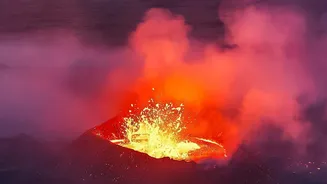
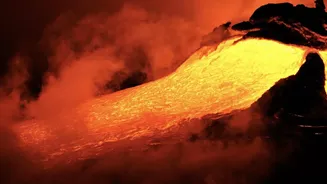
The eruption of Mount Nyiragongo in the Democratic Republic of Congo in January 2002 was a humanitarian disaster defined by its fast-moving lava. Nyiragongo is notorious for its extremely fluid lava, which can flow at speeds up to 100 km/h. When it erupted,
lava flows poured into the city of Goma, destroying an estimated 15% of the city, including 4,500 buildings. The eruption directly led to the deaths of around 245 people, primarily from carbon dioxide asphyxiation and building collapses. The global impact was primarily humanitarian. Around 120,000 people were left homeless, sparking a massive international aid response to address the urgent need for shelter, food, and clean water. The lava also destroyed water treatment facilities, creating a risk of water-borne diseases like cholera for the displaced population.
Eyjafjallajökull, Iceland (2010): The Ash Cloud That Grounded the World
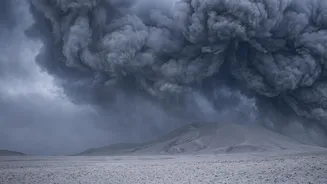
In stark contrast to Nyiragongo, the 2010 eruption of Iceland's Eyjafjallajökull volcano had a very low direct death toll but an outsized global impact. The eruption occurred under a glacier, and the interaction between the hot lava and cold meltwater created a plume of very fine glass and ash particles that was ejected high into the jet stream. This ash cloud was then carried directly over Europe, home to some of the world's busiest airspace. Worries that the abrasive ash could damage and stall jet engines led to the largest shutdown of air traffic since World War II. Over a period of about eight days, more than 100,000 flights were cancelled, affecting around 10 million passengers worldwide and costing the airline industry an estimated $1.7 billion in lost revenue. The event was a wake-up call, highlighting the vulnerability of modern global travel networks to a single, distant natural event.
Mount Merapi, Indonesia (2010): A Deadly and Explosive Event
Later that same year, Indonesia's Mount Merapi unleashed its largest eruption since the 1870s. Beginning in late October 2010, a series of violent explosions generated deadly pyroclastic flows—fast-moving currents of hot gas and volcanic matter—that swept down the densely populated slopes. These flows and other eruption-related incidents were responsible for the deaths of 386 people. The eruption forced the evacuation of over 350,000 residents. While the impact was most severe locally and regionally, the massive ash plumes also caused significant disruption to aviation across Java. The event demonstrated the immense challenge of evacuating large populations and underscored the deadly threat posed by pyroclastic flows in one of the world's most volcanically active regions.
Volcán de Fuego, Guatemala (2018): Swift and Devastating Pyroclastic Flows
The June 2018 eruption of Guatemala's Volcán de Fuego was one of the century's deadliest. With little warning, the volcano produced a series of powerful explosions that sent pyroclastic flows racing down its slopes at over 80 kilometers per hour. These flows engulfed several villages, including San Miguel Los Lotes and El Rodeo, leaving residents with almost no time to escape. The official death toll was placed at 194, with another 234 people listed as missing and presumed dead. The eruption affected over 1.7 million people in total, destroying homes, infrastructure, and thousands of hectares of crops like coffee and corn. Ashfall reached the capital, Guatemala City, forcing the closure of its international airport. The tragedy highlighted the extreme danger of pyroclastic flows and the difficulty in managing risks for communities living in the shadow of persistently active volcanoes.
Hunga Tonga-Hunga Haʻapai, Tonga (2022): A Global Atmospheric Shockwave
The eruption of the underwater Hunga Tonga-Hunga Haʻapai volcano in January 2022 was the largest explosive event of the 21st century, so powerful it was compared to the 1883 Krakatoa eruption. The blast generated an atmospheric shockwave that circled the globe multiple times and triggered tsunami waves across the Pacific. But its most unique global impact was on the atmosphere. The submarine eruption injected an unprecedented amount of water vapor—an estimated 150 million tons—directly into the stratosphere, increasing the total stratospheric water content by about 10%. This was a scientifically significant event, as water vapor is a potent greenhouse gas. While scientists concluded the eruption did not cause the record global temperatures seen in 2023-2024, the event provided an unparalleled opportunity to study how such a massive injection of water vapor can affect atmospheric chemistry and the ozone layer for years to come.