




More Than Just a Fast
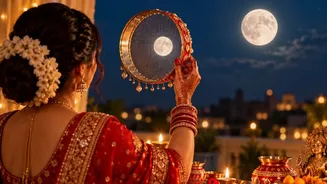
Karwa Chauth is a festival steeped in symbolism and ritual. Observed on the fourth day after the full moon in the Hindu month of Kartik, it involves women fasting from sunrise to moonrise. While the act of fasting is central, the day is also filled with
prayer, community gatherings, and the telling of sacred stories, or 'vrat kathas'. The most prominent of these kathas, recited in households across North India, is the tale of Queen Veeravati, whose experience is said to have shaped the very rituals of the festival as they are known today.
The Legend of Queen Veeravati
The story begins with Veeravati, a beautiful queen who was the only and much-loved sister to seven devoted brothers. After her marriage to a king, she returned to her parents' home to observe her first Karwa Chauth fast. Following tradition, she began the strict, waterless fast at dawn. As the day wore on, however, the queen, unaccustomed to such hardship, grew weak and faint from hunger and thirst. She desperately awaited the moonrise, which would signal the end of her fast.
A Deception Born of Love
Seeing their beloved sister in distress, the seven brothers could not bear her suffering. In an act of love, they devised a plan to trick her into eating. They climbed a pipal tree and created the illusion of a full moon by holding a mirror or a lamp behind a sieve, making it appear as though the moon had risen in the distance. Deceived by the false moon, the trusting Veeravati broke her fast and took her meal.
The Dire Consequences
The moment Veeravati ate, the consequences of breaking the fast incorrectly were immediate and severe. She received word that her husband, the king, had suddenly fallen gravely ill or, in some versions of the tale, had died. Heartbroken, she rushed towards her husband's kingdom. On her journey, she encountered Lord Shiva and Goddess Parvati (or the goddess Indrani in some tellings). Parvati explained that the tragedy had befallen her husband because Veeravati had broken her fast by sighting a false moon.
A Year of Penance and Redemption
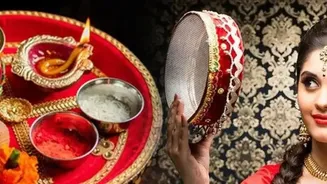
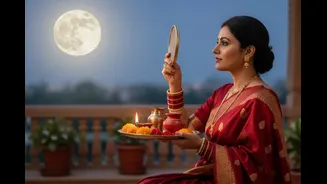
Seeing the queen's profound grief and repentance, the goddess offered a path to redemption. She instructed Veeravati that her husband could be revived, but only if she undertook the fast again, this time with unwavering adherence to the rituals. In some versions, this required her to observe a fast on every 'chauth' (fourth day of the lunar cycle) for an entire year. Veeravati diligently followed these instructions. The following Karwa Chauth, she completed the fast with full devotion, waiting for the real moon to rise. Her penance paid off, and her husband was revived. This story is why, to this day, women often use a sieve (channi) to view the moon, ensuring its authenticity before breaking their fast and honouring Veeravati's trial.