







The Problem with Rockets
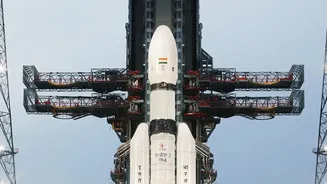
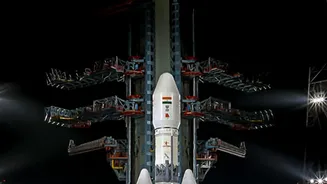
For over sixty years, rockets have been our only gateway to the stars. But they come with immense costs. Companies like SpaceX have revolutionized the industry by making rockets reusable, driving down the price of launching a satellite. Still, the fundamental
economics remain challenging. A launch on a Falcon 9 rocket can cost around $3,000 per kilogram. Rockets are complex, require expensive propellants, and can't be launched in quick succession. This high cost remains a significant barrier for the rapidly growing satellite industry, which is projected to launch tens of thousands of new satellites in the coming years. A cheaper, more frequent launch method could fundamentally change the economics of space.
A Cannon to the Cosmos
Enter Longshot Space. The company is developing a kinetic launch system—in simpler terms, a giant space gun. The idea itself isn't new, drawing inspiration from concepts like the World War II-era V-3 cannon and the 1960s Project HARP, which used a large gun to fire projectiles to the edge of space. Longshot's system uses compressed gas to accelerate a projectile through a very long tube. The key innovation is a technique called side injection. Instead of a single push from behind, gas is injected from ports along the barrel, pushing against a long, tapered tail on the projectile. This allows the projectile to travel much faster than the gas itself, much like squeezing a tube of toothpaste. The company has already conducted over 100 test launches with a prototype in Alameda, California, reaching speeds over Mach 4.
Surviving the Ascent
Firing a satellite from a cannon presents enormous challenges. The first is the immense acceleration. While this system is not designed for humans, even ruggedized electronics must be built to withstand the crushing G-forces. The second major hurdle is the atmosphere. A rocket gathers speed as it ascends into thinner air, but Longshot's projectile will hit the dense lower atmosphere at its maximum velocity—over Mach 25 for an orbital launch. This creates incredible heat and aerodynamic stress. To counter this, the company is developing a hypersonic glide vehicle called Glowrider. This specially designed projectile would use its shape to trade momentum for lift, essentially skipping off the atmosphere like a stone on water to reach its target altitude.
A Multi-Billion Dollar Gamble
Longshot's name is fitting; successfully building a space cannon is a monumental task. The full-scale orbital version would require a barrel 10 to 15 kilometers long, likely built in a remote location. However, the company has a pragmatic, stepwise plan. It is first targeting the hypersonic testing market, a key area of focus for the U.S. military. Longshot claims it can reduce the cost of a single hypersonic test from millions of dollars to as little as $150,000. This strategy provides a path to revenue and a way to prove the technology at smaller scales. The approach has attracted serious attention, with the company raising $20 million from investors including Sam Altman and South Park Commons, along with support from the U.S. Air Force.
The Future of Space Launch?
If Longshot succeeds, the payoff could be astronomical. The company claims its system could eventually lower the cost of launching cargo to orbit to just $10 per kilogram, a figure that would shatter all existing price models. Such a system would be more like civil infrastructure—steel and concrete—than delicate aerospace hardware, capable of firing multiple times a day. This could enable projects currently considered science fiction, from large-scale space manufacturing to more ambitious planetary exploration. The company is currently building a larger test facility in Nevada, with plans to reach Mach 15 speeds in the next couple of years. It's a long road from a test site in the desert to a commercial spaceport, but Longshot is betting that this old idea's time has finally come.