






An Alarming Silence
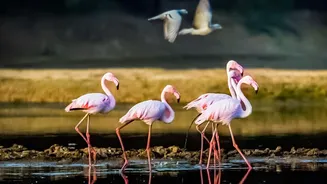
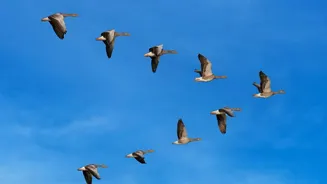
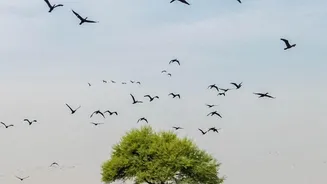
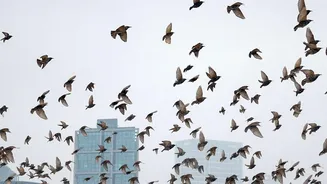
Across India, the skies are becoming quieter. Recent reports, including the State of India's Birds 2023, paint a concerning picture: a significant number of our winged visitors are in decline. Long-distance migrants, especially those journeying from the frigid
Arctic to winter in India, have been hit the hardest, with some populations dropping by as much as 80%. This isn't a distant problem; it's being observed in local wetlands from Kerala to Delhi, where traditional birding hotspots have reported steep drops in annual bird counts. Overall, studies indicate that more than half of the world's migratory bird species are declining, signalling a widespread biodiversity crisis.
The Disappearing Welcome Mat
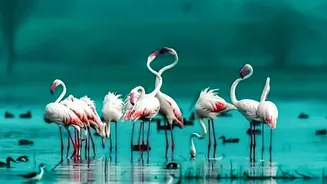
The single greatest driver of this decline is the loss and degradation of critical habitats. Migratory birds rely on a chain of intact ecosystems—wetlands, grasslands, forests, and coastal mudflats—to rest and refuel during their immense journeys. In India, these vital stopover sites are vanishing at an alarming rate. Wetlands are being drained for urban expansion and agriculture, polluted by industrial and domestic waste, and fragmented by infrastructure projects. According to some estimates, India has lost nearly one-third of its natural wetlands in the last three decades alone. For a Bar-headed Goose or a Siberian Crane, arriving after a perilous flight over the Himalayas to find a wetland has been replaced by a construction site is a death sentence.
India's Critical Role on a Global Flyway
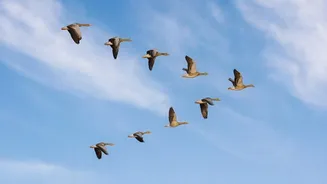
India sits at the heart of the Central Asian Flyway (CAF), a vast migration corridor that spans 30 countries from the Arctic to the Indian Ocean. This makes our nation's habitats indispensable for over 180 species of migratory waterbirds, including 29 globally threatened species. Sites like Chilika Lake in Odisha, Keoladeo National Park in Rajasthan, and Harike Wetland in Punjab are not just local treasures; they are internationally crucial service stations on this avian superhighway. The threats along this flyway are numerous, including unsustainable water management and pollution, which degrade the very grounds these birds depend on for survival. The decline of birds on the CAF is a direct reflection of the health of these ecosystems.
Why Their Journey Matters to Us
The loss of migratory birds extends far beyond a quieter winter. These birds are vital indicators of environmental health; their decline signals grave stress in our ecosystems, such as water scarcity and pollution. They also provide essential ecological services that benefit humans directly. Many species help control agricultural pests, pollinate plants, and disperse seeds, contributing to healthy forests and farmlands. Furthermore, bird-related tourism is a significant source of livelihood for communities near sanctuaries like Keoladeo and Chilika. When we protect the wetlands that these birds need, we are also protecting the ecosystems that absorb floodwaters, recharge groundwater, and support local economies.
A Path to Recovery
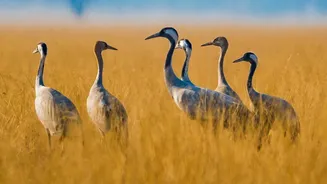
The situation, while dire, is not without hope. Conservation efforts are gaining momentum across the country. India has a National Action Plan for the Conservation of Migratory Birds, which aims to protect habitats and halt the population decline. There are inspiring stories of community-led conservation, such as in Nagaland, where villages have transformed from hunting grounds for Amur Falcons into conservation hubs. In Rajasthan, the village of Khichan has a long tradition of feeding thousands of Demoiselle Cranes. These efforts, combined with the expansion of protected areas and the crucial data gathered by thousands of citizen birdwatchers, provide a framework for action. Protecting these global travellers requires a coordinated effort, from policy-makers to local communities.