




The Ultimate Logistics Problem
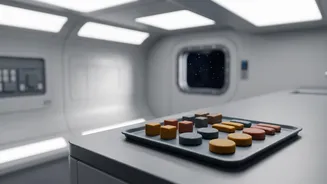
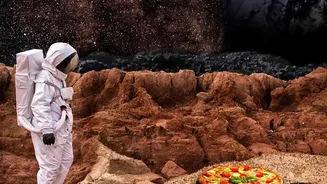
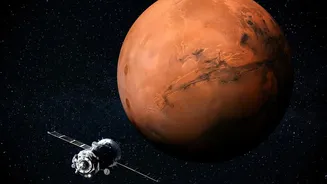
A round trip to Mars could take roughly three years. Packing that much food is not just a storage problem; it's a physics problem. Every kilogram launched from Earth costs thousands of dollars in fuel. Pre-packaged meals are heavy, bulky, and lose nutritional
value over time. Growing plants hydroponically is possible, but requires significant water, energy, and space—all precious commodities on a spacecraft. This has led space agencies like NASA to look for a more radical solution: making food from scratch, using the very air the astronauts exhale.
From Waste Carbon to Edible 'Goo'
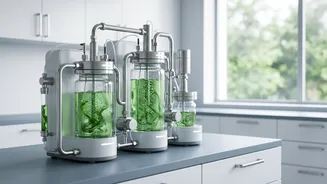
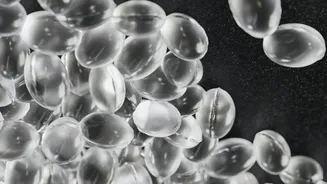
The core idea sounds like science fiction: turn waste carbon dioxide into edible calories. The concept, which dates back to NASA research in the 1960s, relies on tiny, single-celled organisms called microbes. These microbes, specifically types known as hydrogenotrophs, can consume carbon dioxide and, through fermentation, convert it into protein and fat. The process is often compared to making yogurt or beer, but instead of using sugar as the input, it uses CO2. The end product is often a protein-rich powder or paste—a 'microbial goo' that can be used as a nutritional base. While it might not sound appetizing, this biomass could provide essential nutrients to keep astronauts healthy millions of miles from home.
Enter µBites: A Taste of the Future
The headline's 'Microbites' points to a very real project called µBites (pronounced micro-bites), developed by researchers at Southern Illinois University for NASA's Deep Space Food Challenge. Their early tests take recycling a step further, demonstrating a way to convert not just CO2, but also inedible plant matter and even plastic waste into food. The process involves breaking down these waste materials with heat and pressure into their basic carbon molecules. Then, specially engineered yeast strains are introduced. These microbes feast on the carbon-rich liquid, converting it into proteins, fats, and even flavorings. In one test, the team used baker's yeast to produce vanillin, the molecule responsible for vanilla flavor, from plant waste.
The First 'Plastic' Cookie
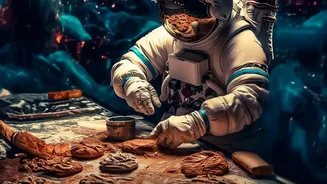
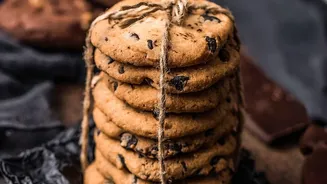
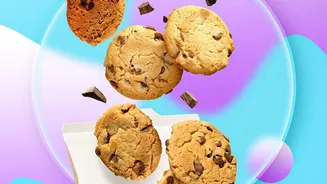
The µBites project culminated in a remarkable proof of concept: a 3D-printed cookie. After the microbes produced the basic nutrients, the team added starch and fiber to create a paste that could be extruded by a 3D printer into a cookie shape. It's important to note that astronauts would not be eating plastic. The plastic is first broken down into its fundamental, safe-to-consume carbon components, which the microbes then build back up into edible, biological matter. While institutional approval is still needed for human taste tests, the team has comprehensively analyzed the cookies to ensure they are free from harmful chemicals. Early sensory tests suggest the cookies have a pleasant smell.
Beyond the Stars, for Earth
While developed for the extreme environment of space, this technology has profound implications for Earth. Companies like Air Protein and Solar Foods are already developing similar processes to create sustainable protein with a tiny fraction of the land and water required for traditional agriculture. These technologies could provide food in disaster zones, remote military outposts, or in regions where climate change makes farming difficult. The core challenge remains energy consumption; these processes require significant electricity. However, by linking them to renewable energy sources, we could create a truly circular food system, turning our own carbon emissions into the food we eat.