






The Buzz Around a Rocket a Month
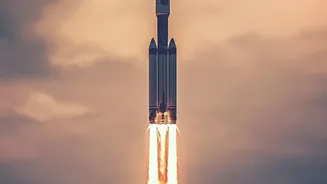
Hyderabad-based Skyroot Aerospace has been a beacon of India's burgeoning private space sector, especially following the historic orbital launch of its Vikram-1 rocket. The company made headlines by announcing it had established the manufacturing capability
to produce one Vikram-class rocket every month. This news, coupled with the inauguration of its 200,000-square-foot Infinity Campus, painted a picture of an assembly line ready to churn out rockets and rapidly increase India's share of the global satellite launch market. The announcement suggested a dramatic scaling of operations, positioning Skyroot as a formidable player ready to offer frequent and cost-effective launch services to the world.
Pumping the Brakes: The Crucial Clarification
Amid the excitement, Skyroot co-founder and CEO Pawan Kumar Chandana has provided a crucial dose of reality. In recent statements, he clarified that having the capacity to build one rocket a month does not mean the company will be launching one rocket a month—at least, not yet. Chandana explained that while the factory is capable, achieving a high launch cadence is a separate and more complex challenge. The focus, he stated, is first on proving the rocket's reliability through a few more test flights and then gradually building towards more frequent commercial missions. This distinction is not a step back, but a transparent look into the complex business of spaceflight.
Capacity vs. Cadence: A Simple Analogy
So, what is the difference? Think of it like a high-end car factory. 'Capacity' is the ability to manufacture, say, 1,000 cars a month. This means the factory floor is set up, the machinery is in place, and the staff are trained. However, 'cadence'—or in this case, sales—is the number of cars that actually get sold and driven off the lot each month. Just because you can build 1,000 cars doesn't mean you have 1,000 buyers lined up every 30 days. For Skyroot, having the capacity to build a rocket a month is a monumental manufacturing achievement. But the launch cadence depends on a different set of factors: customer demand, payload readiness, launch pad availability, regulatory approvals, and weather, to name a few.
The Real-World Hurdles to a Monthly Launch
For any new launch provider, turning capacity into cadence is the ultimate challenge. The primary hurdle is market demand. Satellite operators, whose payloads are often worth millions of dollars, are famously risk-averse. They need to see a rocket prove its reliability over multiple successful flights before they commit their expensive hardware to it. This creates a classic chicken-and-egg scenario: you need flights to get customers, but you need customers to justify the flights. Beyond securing a manifest, there are significant logistical and regulatory hurdles. These include supply chain complexities for mission-critical components, the lengthy process of integrating a customer's satellite with the rocket, and securing all necessary clearances for each specific launch. While India has made strides in creating an efficient regulatory environment, the process is still rigorous.
Skyroot's Pragmatic Path Forward
Skyroot's clarification signals a mature and strategic approach. The company's immediate plan, following the successful 'Aagaman' mission, is to conduct a couple more developmental flights to analyse data and perfect the Vikram-1's performance. This data is foundational to establishing the vehicle's reliability, which in turn builds customer confidence. Once the rocket is deemed commercially ready, the focus will shift to steadily increasing the launch frequency. The Vikram-1 will be the company's workhorse for the near future, catering to the booming small satellite market. The successful first flight has already given the company a massive advantage, demonstrating capability that few private companies in the world have achieved. The goal now is to convert that technical success into a sustainable, reliable, and eventually, high-cadence launch business.