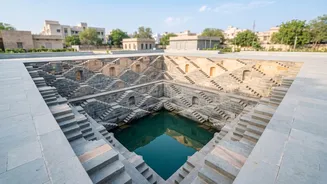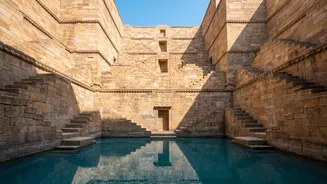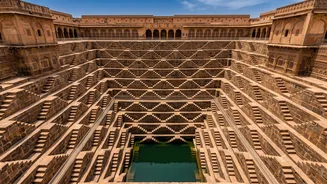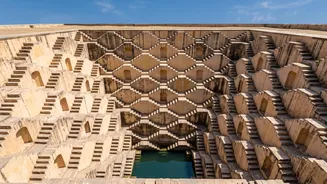





Chand Baori, Rajasthan
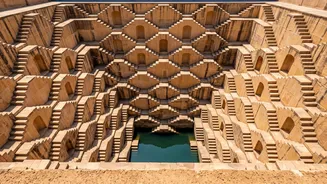
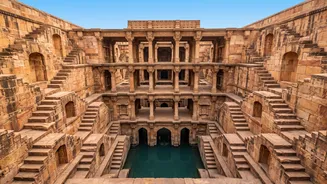
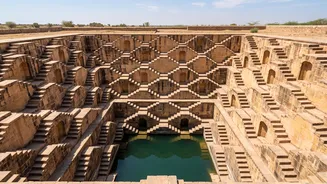
Located in the village of Abhaneri, Chand Baori is one of India's deepest and most visually stunning stepwells. Constructed in the 9th century, it descends 13 stories and has 3,500 narrow, symmetrical steps. Its primary purpose was water harvesting in the arid
landscape of Rajasthan. The ingenious design ensures that the temperature at the bottom remains 5-6 degrees Celsius cooler than the surface, making it a natural community gathering spot during intense heat. This inverted pyramid structure is a masterpiece of geometric precision and practicality, serving both as a reliable water source and a social hub.
Rani ki Vav, Gujarat
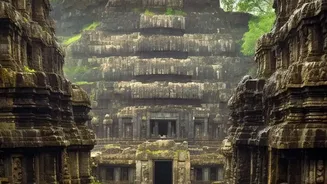
A UNESCO World Heritage Site, Rani ki Vav (the Queen's Stepwell) in Patan is an exemplary model of subterranean architecture. Built in the 11th century on the banks of the Saraswati River, it was designed as an inverted temple to highlight the sanctity of water. This seven-level stepwell combines a high degree of artistic and aesthetic quality with a functional water management system. It features over 500 principal sculptures and thousands of minor ones, turning a utilitarian structure into an elaborate work of art. After being silted over by the river for centuries, it was excavated to reveal its breathtakingly intricate craftsmanship.
Adalaj ni Vav, Gujarat
Just outside Ahmedabad, the Adalaj Stepwell is a five-story deep structure celebrated for its fusion of Hindu and Islamic architectural styles. Built in 1499, its octagonal plan is a key feature. Large openings in the ceilings of various floors allow for light and air to ventilate the structure, while the descent into the earth provides a natural cooling effect. Beyond providing water, Adalaj ni Vav was designed as a tranquil resting place for pilgrims and traders, with carved galleries and platforms for people to congregate. The walls are covered in carvings depicting everything from daily life to mythological scenes.
Agrasen ki Baoli, Delhi
Tucked away amidst the high-rises of Central Delhi, Agrasen ki Baoli is a historical gem. Believed to have been originally built by the legendary King Agrasen and later rebuilt in the 14th century, this 60-meter long and 15-meter wide stepwell consists of 103 stone steps. It features three levels, each lined with arched niches. These structures not only provided structural support but also offered shaded spots for visitors to rest. As a protected monument, it served the crucial function of a water reservoir and a community space right in the heart of a bustling area.
Panna Meena ka Kund, Rajasthan
Situated near Amer Fort in Jaipur, this 16th-century stepwell is known for its unique, crisscrossing symmetrical staircases. The geometric pattern of the steps is not just for aesthetic appeal; it was a practical design for water collection during the monsoon to be used in drier months. The Kund is eight stories deep and served as a vital community hub where people would collect water, socialise, and escape the desert heat. Its octagonal shape and surrounding gazebos offer picturesque views, blending natural beauty with architectural ingenuity.
Toorji ka Jhalra, Jodhpur
Built in the 1740s by a queen of Maharaja Abhay Singh, Toorji ka Jhalra is a testament to the tradition of royal women commissioning public water works. For decades, this stepwell in Jodhpur was submerged and filled with debris before a recent restoration brought it back to life. The structure, made of classic Jodhpur rose-red sandstone, features intricate carvings of dancing elephants and deities. Its original system even included a Persian wheel mechanism run by bullocks to draw water to different levels, showcasing an advanced understanding of water lifting technology for its time.
Dada Harir ni Vav, Gujarat
Another architectural jewel in Ahmedabad, Dada Harir ni Vav was built in 1485 by a superintendent of the Royal Harem. This five-story stepwell is octagonal and features a unique blend of Sanskrit and Arabic inscriptions. The design is masterful in its use of natural light, which filters down through the levels. One of its most impressive engineering feats is its natural cooling system; the temperature inside can be several degrees cooler than the outside, offering a cool sanctuary from Gujarat's heat. Spiral staircases provide access to the different floors, making it a complex and fascinating structure to explore.
Rajon ki Baoli, Delhi
Located in the Mehrauli Archaeological Park, Rajon ki Baoli is considered one of the grandest stepwells in Delhi. Its name translates to "stepwell of the masons." Built during the Lodi dynasty in the 16th century, it is a multi-level structure with a distinct courtyard-like feel. The engineering is evident in its substantial arches and passages that create a cool, shaded environment. It includes a mosque and a tomb, highlighting its importance not just as a water source but as a significant social and religious complex. It was a complete ecosystem designed for the community, providing water, prayer space, and social areas.