


The Unquestioned Reign of Poha
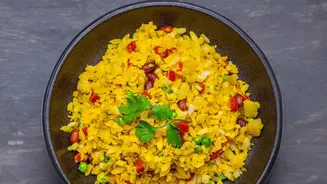
To understand Madhya Pradesh’s culinary landscape is to understand the significance of Poha. It is more than just a breakfast dish; it's a cultural institution. Originally hailing from Maharashtra, it was adopted and perfected in cities like Indore, becoming
a symbol of local identity. Served from dawn till dusk at countless stalls, this dish of flattened rice is steamed to fluffy perfection, tossed with turmeric, mustard seeds, and often garnished with crunchy sev, chopped onions, and a squeeze of lemon. What gives Indori Poha its unique kick is the special 'Jeeravan' masala, a complex spice blend that elevates it from a simple snack to an unforgettable experience. It’s quick, affordable, and beloved by all, from office-goers to students, cementing its status as the region’s primary culinary ambassador.
Enter the Challenger: What is Bhutte Ka Kees?
While Poha basks in the limelight, another local delicacy thrives in the bustling food lanes of Indore, especially during the monsoon season. Bhutte Ka Kees is its name, and its essence is pure comfort. 'Bhutta' means corn, and 'Kees' refers to the act of grating. The dish is exactly that: freshly grated corn, slow-cooked into a savory, porridge-like delicacy. Unlike the light and separate flakes of poha, Bhutte Ka Kees boasts a creamy, almost decadent texture, achieved by simmering the grated corn with milk, ghee, and a gentle blend of spices like cumin, ginger, and green chillies. It’s a dish that celebrates the simplicity and natural sweetness of one of the region's key crops.
A Symphony of Texture and Taste
The experience of eating Bhutte Ka Kees is a world away from that of Poha. Where Poha offers a light, fluffy base punctuated by the crunch of peanuts and sev, Bhutte Ka Kees is a study in creaminess. The process begins by grating tender corn cobs to release their milky starches. This pulp is then gently sautéed in ghee with mustard seeds and other aromatics before being slow-cooked with milk until it thickens into a rich, spoonable consistency. The final dish is savory and slightly sweet from the corn, with a mild heat from green chillies. Served hot, it's typically garnished with fresh coriander, grated coconut, and a squeeze of lime juice, which cuts through the richness and brightens the flavors. It's a wholesome, filling snack that is both rustic and refined.
A Tale of Two Stars
So why did Poha become a national phenomenon while Bhutte Ka Kees remained a cherished local secret? The reasons likely lie in practicality and seasonality. Poha, made from dried flattened rice, is available year-round and is incredibly quick to prepare, making it ideal for mass-market street vending and a staple breakfast. Its ingredients are easy to store and transport. Bhutte Ka Kees, on the other hand, is traditionally made with fresh, tender, seasonal corn for the best flavour and milky texture. The reliance on fresh produce ties it more closely to the monsoon and winter months, making it a seasonal specialty rather than a daily staple. Its cooking process, while simple, is slower and more involved than Poha's, lending it more to being a special-occasion treat than a fast-food breakfast.
Making Room at the Table
To champion Bhutte Ka Kees is not to diminish the glory of Poha. Rather, it is to celebrate the rich diversity of Madhya Pradesh's cuisine. Poha is the reliable, everyday hero, but Bhutte Ka Kees is the soulful indulgence, a dish that speaks of seasonality and the deep agricultural roots of the Malwa region. It represents a different facet of Indori food culture—one that is perhaps less known but no less delicious. Its unique texture and comforting flavour profile offer a culinary experience that is entirely its own and wholly deserving of recognition.