






A Case of Mistaken Identity
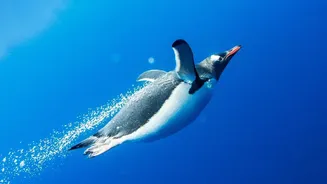
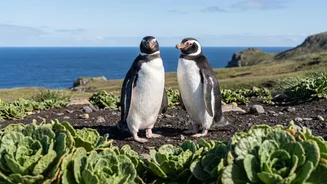
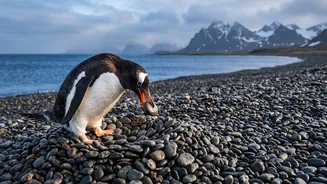
For over a century, scientists have debated the classification of gentoo penguins, which are found across a vast range from the Antarctic Peninsula to sub-Antarctic islands. While populations looked slightly different and lived thousands of kilometres
apart, they were all considered one species: Pygoscelis papua. However, what the eye can't easily see, genetics can reveal. A major international study has shown that what we call the gentoo is actually a family of four distinct species that have been evolving separately for hundreds of thousands of years. This kind of discovery, where a species is hiding in plain sight, is known in science as a 'cryptic species'.
Meet the New Family Tree
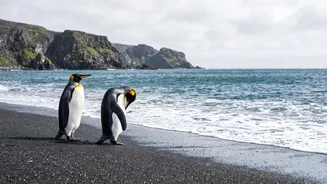
The groundbreaking research proposes a new family tree for the gentoos. The single species has been split into four: the Northern gentoo (Pygoscelis papua), the Southern gentoo (P. ellsworthi), the Eastern gentoo (P. taeniata), and a newly named species, the Southeastern gentoo (Pygoscelis kerguelensis). The Kerguelen penguin from the headline refers to this newly designated species, P. kerguelensis, which resides on the remote Kerguelen Islands in the southern Indian Ocean. While they look very similar to the others, they are genetically distinct and even have subtle differences in their size and calls. The formal recognition of the Kerguelen penguin marks the first time a new penguin species has been named in over 100 years.
The DNA Detective Story
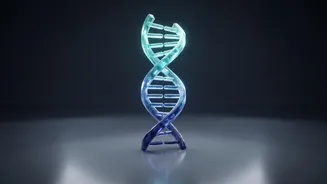
So, how did scientists uncover this hidden diversity? The breakthrough came from comprehensive genomic analysis. An international team of researchers, led by scientists from institutions in Chile and the University of California, Berkeley, sequenced the full genomes of 64 penguins from ten different breeding colonies. This allowed them to create a detailed evolutionary tree, revealing the deep genetic splits between the four groups. They found that the groups rarely, if ever, interbreed, despite sometimes living within swimming distance. Reinforcing the genetic data, the team also studied physical measurements from museum specimens, some over a century old, which confirmed subtle but consistent differences between the populations.
Why This Changes Everything for Conservation
This reclassification is far more than a simple name change; it has critical implications for conservation. Previously, the gentoo penguin was listed as a species of 'Least Concern' by the IUCN, as its total population is relatively stable. However, treating them as four separate species changes this picture dramatically. What was once seen as one large, resilient population is now four smaller, more isolated ones, each facing unique environmental pressures. Researchers warn that climate change and warming oceans could cause severe habitat loss for three of the four species by 2050, particularly those on sub-Antarctic islands. By recognising each as a distinct species, conservationists can now monitor their populations individually and tailor protection efforts to their specific needs, ensuring that a decline in one group isn't masked by the stability of another.