




The Challenge of Endless Variety
Not long ago, car factories were designed to do one thing: build thousands of identical cars as efficiently as possible. But today’s customers demand more. They want SUVs, electric vehicles (EVs), and commercial trucks, each with different features and specifications.
For an automaker, this creates a complex puzzle. How do you build a small electric SUV, a large diesel-powered utility vehicle, and a commercial pickup on the same factory floor without grinding production to a halt? For Mahindra & Mahindra, the answer lies in its sprawling 657-acre facility in Chakan, which has become a showcase for the future of Indian manufacturing. The plant is engineered not just for volume, but for unprecedented flexibility.
Inside the Factory of the Future
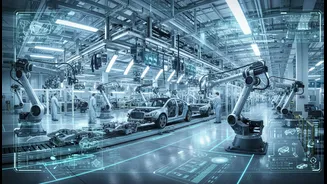
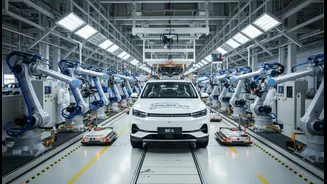
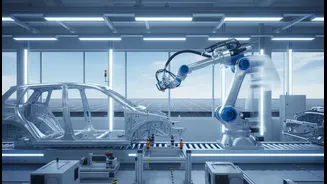
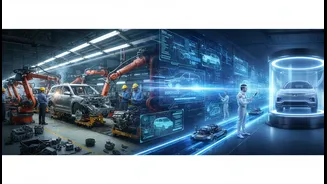
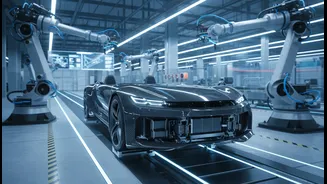
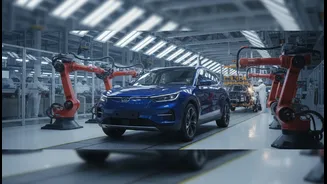
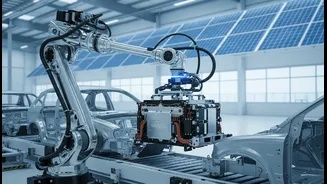
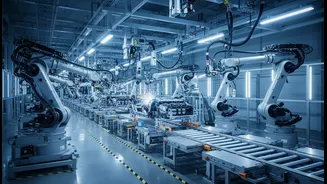
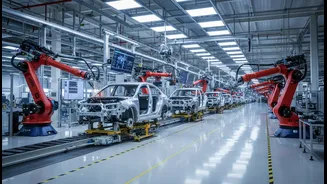
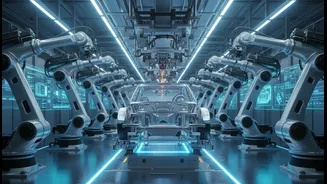
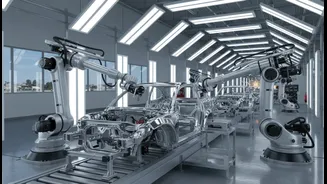
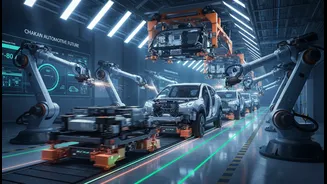
Step inside the Chakan plant, and you are stepping into a hub of advanced manufacturing. The facility now produces an impressive 19 models and over 450 variants, from traditional internal combustion engine (ICE) vehicles to the latest EVs like the BE 6. This is made possible through a deep integration of what is known as Industry 4.0 technology. This includes a network of approximately 1,500 robots, particularly in the body shop, which boasts an automation level of over 98%. These robots handle tasks like welding, painting, and sealing with a precision and consistency that is difficult to achieve manually. This army of robots allows a single assembly line to handle multiple vehicle chassis and body types, a crucial element for a diverse product portfolio.
More Than Just Robots
While robots are the most visible sign of automation, the intelligence behind the operation runs much deeper. The plant utilises Artificial Intelligence (AI) and the Internet of Things (IoT) to create a 'smart factory'. Sensors across the production line provide real-time data on everything from weld integrity to the torque of a bolt. This data is monitored in a central 'nerve center', allowing engineers to trace every component and process, anticipate maintenance needs, and ensure quality at every step. Material movement is handled by Autonomous Mobile Robots (AMRs) that navigate the factory floor to deliver parts where they are needed, enhancing safety and efficiency. This digital ecosystem is the key to managing the complexity of building so many different vehicles under one roof.
Flexibility is the New Speed
The result of this investment in automation is extreme flexibility. The Chakan facility has seven multi-model assembly lines that can be quickly configured to handle different vehicles. This means Mahindra can ramp up production of a popular model like the Scorpio-N or XUV700 in response to market demand, or seamlessly introduce a new EV without needing to build an entirely separate factory. This agility is a significant competitive advantage. The plant's production pace has accelerated dramatically; it took 107 months to build its first million vehicles, but only 27 months to produce the most recent million. This fourfold increase in speed shows how technology has enabled the factory to scale up efficiently to meet booming demand.
A Blueprint for Indian Manufacturing
Mahindra's Chakan plant is more than just a success story for the company; it serves as a powerful example for India's entire manufacturing sector. For years, Indian manufacturing has competed on cost, but the global market now demands higher standards of quality, speed, and traceability. The automation and digitalisation at Chakan show a path forward, moving from a labour-intensive model to a technology-driven one. By successfully producing a wide mix of vehicles, including for export to markets like Australia and South Africa, the plant demonstrates that Indian manufacturing can compete on a global stage in terms of both quality and technological sophistication.