





What is 'Operation Economic Outcast'?
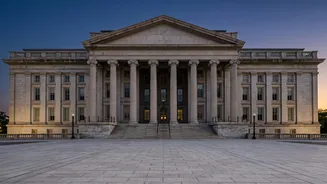
Announced on August 24, 2026, by US Treasury Secretary Scott Bessent, 'Operation Economic Outcast' is a US-led initiative aimed at closing loopholes in the existing financial dragnet around Iran. Bessent described the campaign as an "economic D-Day" and
an "economic onslaught" designed to cut off every financial lifeline sustaining the Iranian government. The stated objective is to force countries and companies worldwide to choose between doing business with Iran and maintaining access to the US dollar-based financial system. The campaign targets not just Iranian entities, but the international network of facilitators, shippers, banks, and technology providers that help Tehran evade long-standing sanctions. It builds on previous efforts like "maximum pressure" and "Operation Economic Fury" by expanding the scope of so-called secondary sanctions.
The New Sanctions Playbook
This new phase of sanctions goes beyond simply blacklisting Iranian companies. The US Treasury has specifically targeted five critical sectors of the Iranian economy for heightened risk: digital assets, technology, gold, aviation, and shipping. Any foreign entity engaging with these sectors in Iran now faces the threat of being cut off from the US financial system. The operation involves mapping and disrupting the complex web of front companies and intermediaries Iran uses to move oil and procure sensitive goods. The latest action sanctioned nearly 60 individuals, entities, and vessels accused of supporting Iran's military, cyber operations, and illicit oil trade. US officials have warned that they are giving countries a defined timeline to cease their interactions with Iran, backed by calls from the US president to world leaders.
Who Is Being Targeted?
The initial wave of sanctions under this operation demonstrates its global reach. Targets include companies and individuals based in China, Russia, Turkey, and the United Arab Emirates, which are some of Iran's largest trading partners. The designations have hit shipping companies in Hong Kong and Singapore, a biofuels plant in France, and various exchange houses and brokers accused of helping Iran launder oil revenues. Notably, the sanctions have also directly impacted Indian firms. At least three India-based companies were sanctioned for allegedly importing tens of millions of dollars worth of Iranian petroleum products between 2023 and 2026. These actions signal that the US is willing to penalize businesses in friendly nations to enforce its policy.
The Ripple Effect on Global Trade
Operation Economic Outcast creates significant uncertainty for global commerce. By threatening to sanction any country or company that serves as a "financial artery" for Iran, the US is forcing a difficult choice: abandon ties with Tehran or risk economic isolation. This aggressive stance could disrupt supply chains and trigger wider trade conflicts, particularly with major powers like China that have resisted previous US pressure. Experts suggest that while the rhetoric is strong, the immediate impact may be more about raising transaction costs for Iran rather than causing a complete economic collapse. Iran has decades of experience in creating new front companies and using a "shadow fleet" of tankers to evade sanctions, meaning it can adapt over time. However, the explicit threat of secondary sanctions puts international banks and corporations on high alert, potentially making them more cautious than ever.
The View From New Delhi
For India, this new campaign presents both direct and indirect risks. The direct risk is clear, with several Indian companies already sanctioned for trading with Iran. This puts other Indian exporters on notice, who are already concerned about the pressure on a trade relationship that has shrunk dramatically from its peak of $17 billion in FY2019. Indirectly, India faces the risk of rising global crude oil prices. If the US successfully pressures China, the world's largest importer of Iranian oil, to cut back, Beijing will seek supplies elsewhere, driving up demand and prices for everyone. The situation forces New Delhi into a delicate diplomatic balancing act, navigating its historically strong ties with Iran, its energy needs, and its strategic partnership with the United States.