





1. Cat-Cow Pose (Marjaryasana-Bitilasana)
This dynamic duo of poses is a classic yoga warm-up that gently awakens the spine and massages the abdominal organs. The rhythmic movement is thought to stimulate blood flow to your gut, which can aid in more efficient digestion. By alternating between
arching and rounding the back, you create a subtle compression and release in the belly, which can help get things moving. How to do it: Start on your hands and knees in a tabletop position, with wrists under shoulders and knees under hips. As you inhale, drop your belly, lift your chest and tailbone, and look forward into Cow Pose. As you exhale, round your spine toward the ceiling, tuck your chin to your chest, and press into your hands for Cat Pose. Flow between these two poses for 5-10 breaths, letting your breath guide the movement.
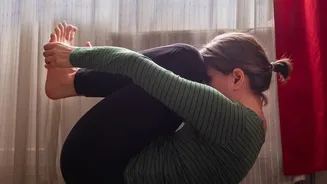
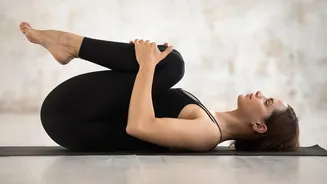
2. Wind-Relieving Pose (Apanasana)
The name of this pose says it all. Apanasana is renowned for its ability to help release trapped gas in the digestive tract, alleviating bloating and discomfort. It works by applying gentle pressure to the abdomen, which massages the ascending and descending colon. This can stimulate intestinal movement and encourage the downward flow of energy (or 'apana vayu' in Sanskrit), which governs elimination. How to do it: Lie on your back and gently draw both knees toward your chest. Wrap your arms around your shins or clasp your hands behind your thighs. You can remain still, holding the pose for 30-60 seconds, or add a gentle rock from side to side to massage your lower back. Focus on deep, relaxed breaths into your belly.
3. Supine Spinal Twist (Supta Matsyendrasana)
Twisting poses are excellent for digestive health because they are believed to 'wring out' the abdominal organs, stimulating circulation and encouraging detoxification. The Supine Spinal Twist provides these benefits in a gentle, restorative way. As you twist, you compress one side of the abdomen and stretch the other. Upon release, fresh blood flows to the digestive organs, which can enhance their function. How to do it: Lie on your back, draw your knees into your chest, and extend your arms out to the sides in a 'T' shape. As you exhale, slowly lower both knees to your right side, keeping both shoulders on the floor. You can turn your gaze to the left to deepen the stretch. Hold for 5-10 breaths, then inhale to return to the center and repeat on the left side.
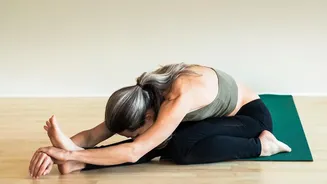
4. Seated Forward Bend (Paschimottanasana)
Forward bends offer a dual benefit of calming the nervous system and stimulating the digestive organs. In the Seated Forward Bend, the gentle compression of the abdomen can help relieve constipation and bloating. As you fold forward, you massage the liver and kidneys, and as you release the pose, circulation to these organs is boosted. This pose also helps activate the 'rest and digest' part of your nervous system, which is crucial for healthy gut function. How to do it: Sit on the floor with your legs extended in front of you. You can keep a slight bend in your knees. Inhale and lengthen your spine, lifting your arms overhead. As you exhale, hinge forward from your hips, reaching for your shins, ankles, or feet. Avoid rounding your lower back; focus on leading with your chest. Hold for 5-8 breaths, feeling the gentle pressure on your belly.
5. Bridge Pose (Setu Bandhasana)
Bridge Pose is a gentle backbend that can be surprisingly beneficial for digestion. Lifting the hips creates space in the abdomen and stretches the abdominal muscles. When you release the pose, the compression can help stimulate the digestive organs. This pose is also thought to stimulate the thyroid gland, which plays a role in regulating metabolism. It's a great way to counteract the effects of sitting for long periods. How to do it: Lie on your back with your knees bent and feet flat on the floor, hip-width apart. Your arms should be alongside your body with palms down. Press into your feet and arms to lift your hips off the floor. Keep your thighs parallel. You can interlace your fingers underneath your back if comfortable. Hold for 30-60 seconds, breathing steadily, and then slowly lower your spine back to the floor.