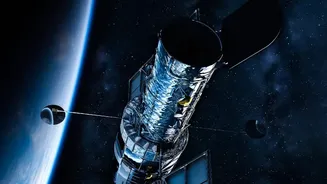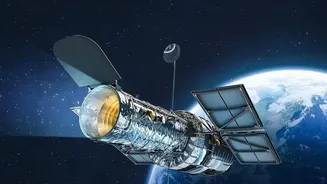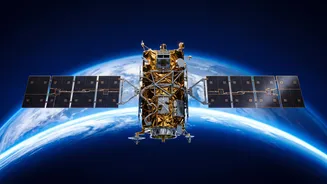

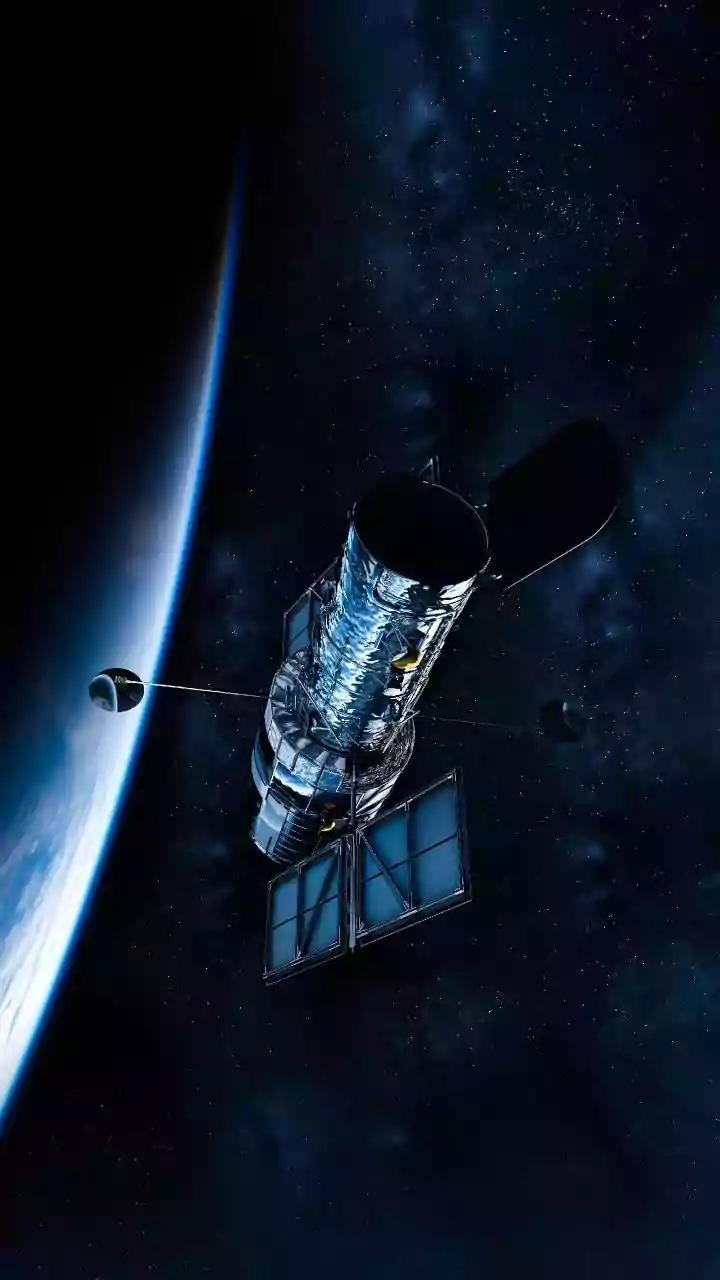
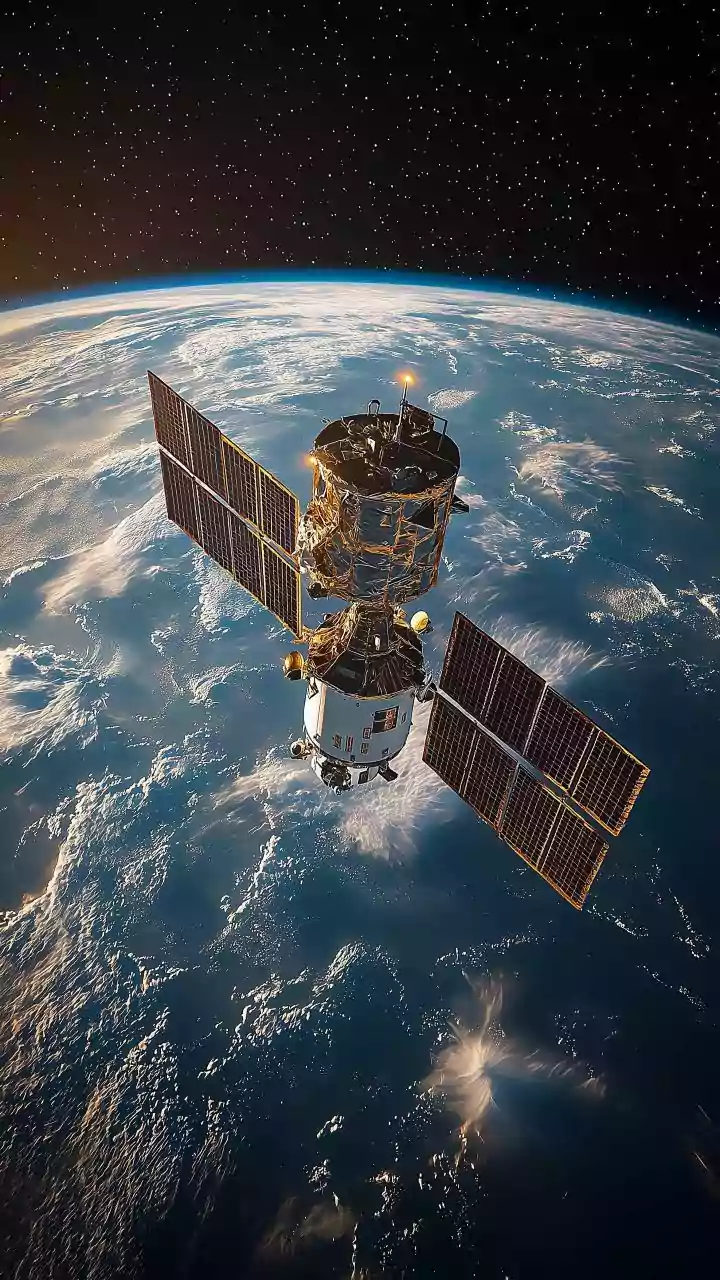
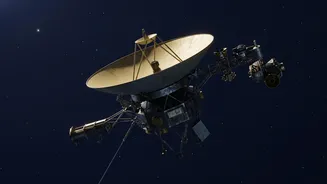
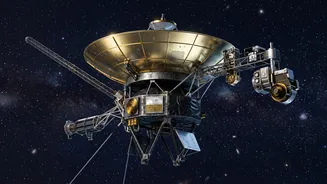

After 22 years chasing the most powerful explosions in the cosmos, one of NASA's most productive observatories has taken its final bow. The Neil Gehrels Swift Observatory concluded its mission on November 4, 2026, with a fiery re-entry.
A Fiery, Final Descent
On November 4,
the U.S. Space Force confirmed that the Swift observatory re-entered Earth's atmosphere over the North Sumatra region of Indonesia. The 1,450-kilogram spacecraft, travelling at thousands of miles per hour, largely burned up due to the immense friction and heat. While NASA expected most of the satellite to disintegrate, it's possible some denser components survived the fall. The re-entry was uncontrolled, a result of Swift's decaying orbit after a last-ditch commercial rescue mission failed earlier in the year. Increased solar activity had expanded Earth's upper atmosphere, creating more drag than the aging satellite could handle, pulling it from its operational altitude until its final plunge.
The Need for Speed
Launched on November 20, 2004, Swift was built for a mission that seemed nearly impossible: to study gamma-ray bursts (GRBs). These are the most powerful explosions in the universe, marking the birth of black holes or the collision of dead stars, but they are incredibly fleeting, often lasting just seconds. Before Swift, scientists struggled to locate these bursts quickly enough to study their fading afterglow. Swift's revolutionary design allowed it to autonomously detect a burst with its Burst Alert Telescope, then 'swiftly' pivot its X-ray and Ultraviolet/Optical telescopes to the exact position in under a minute. This rapid response system, which inspired the observatory's name, was a game-changer for 'transient astronomy'—the study of objects that change quickly.
A Legacy of Discovery
Though designed for a two-year mission, Swift operated for 22, profoundly changing our understanding of the cosmos. It observed over 2,000 gamma-ray bursts, including the most distant one ever detected from when the universe was just 520 million years old. In 2005, it captured the first-ever afterglow from a short GRB, confirming theories that they are caused by the merger of dense objects like neutron stars. Another burst it saw in 2008 was so bright it could have been seen with the naked eye, despite being 7.5 billion light years away. But Swift's work didn't stop with GRBs. It became a versatile multi-tool for astronomers worldwide, studying over 1,400 supernovae, witnessing stars being torn apart by black holes, and even observing comets in our own solar system. Its data has contributed to roughly 7,000 scientific papers.
An Inevitable End of Mission
The end for Swift began as its orbit decayed. Satellites in low Earth orbit are constantly slowed by atmospheric drag, causing them to lose altitude over time. Recent heightened solar activity accelerated this process for Swift. With no onboard propulsion to boost itself, NASA commissioned a novel commercial mission to save the observatory. A robotic servicing spacecraft named LINK, built by Katalyst Space Technologies, was launched in July 2026 to dock with Swift and push it into a higher orbit. However, the rescue vehicle suffered critical failures with its own attitude control systems and was unable to complete the rendezvous, leaving Swift's fate sealed. Science operations officially ended on October 20, 2026, as the spacecraft could no longer maintain a stable orientation against the increasing drag.