





Known as the 'Land of High Passes', Ladakh’s surreal landscape seems to exist on a different plane. But beyond its stark beauty lies a land of superlatives. Why does this high-altitude cold desert hold so many world records?
The Roof of the Motoring World
Ladakh is, quite literally,
on top of the world when it comes to roads. The region is home to the world's highest motorable passes, a testament to the skill of India's Border Roads Organisation (BRO). As of late 2025, the BRO constructed a road reaching Mig La pass at a staggering 19,400 feet, surpassing their own previous record. Before that, the title was held by Umling La at 19,024 feet, which itself had taken the crown from the famous Khardung La. This is possible only because Ladakh's terrain is defined by massive mountain ranges like the Karakoram and Zanskar. These roads aren't just for records; they are vital strategic arteries connecting remote border regions like Demchok and Fukche. The extremely high altitude, thin air, and freezing temperatures make construction an incredible feat of human endurance and engineering.
A Sky-High Saline Wonder
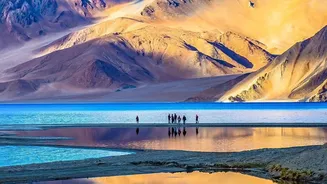
Pangong Tso, the stunningly beautiful lake that changes colour from blue to green to grey, holds the record for being one of the world's highest saltwater lakes. Situated at an altitude of about 4,350 metres (14,270 feet), its salinity is a geological marvel. Pangong is an endorheic basin, meaning it has no outflow to other rivers or seas, so water and minerals that flow in become concentrated over millennia. Despite its high salt content, the lake freezes solid in Ladakh's harsh winters, a phenomenon that speaks to the extreme cold of this high-altitude desert. The lake has even hosted the world's highest frozen lake half marathon, officially recognised by the Guinness Book of World Records.
A Window to the Cosmos
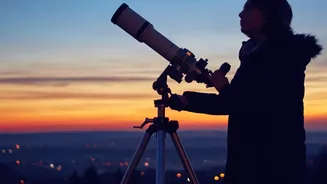
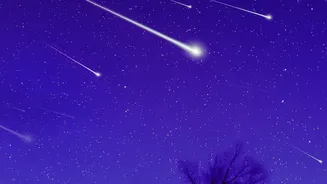
The very same factors that make Ladakh a cold desert—high altitude and dry, clear air—also make it a perfect location for stargazing. The village of Hanle is home to the Indian Astronomical Observatory (IAO), one of the highest observatories in the world, situated at 4,500 metres (14,800 feet). The region's atmosphere has minimal light pollution, low humidity, and over 300 cloudless nights a year. This provides an exceptionally clear view of the cosmos, allowing astronomers to study distant galaxies and celestial events with minimal atmospheric interference. Recognizing its pristine skies, the area around Hanle has been officially designated as India's first Dark Sky Reserve, protecting it from light pollution and preserving its unique astronomical advantage.
The World's Highest Battlefield
Not all of Ladakh's records are about natural beauty or scientific achievement. The Siachen Glacier, located in the eastern Karakoram range, is tragically known as the world's highest battlefield. With military posts at elevations over 6,000 metres (20,000 feet), both India and Pakistan have maintained a presence here since 1984. The record is a grim one, born from a border dispute in a region where extreme weather is often a greater enemy than combat. Temperatures can plummet to minus 60 degrees Celsius, and more soldiers have been lost to frostbite, avalanches, and altitude sickness than to fighting. Its strategic location, acting as a wedge between Pakistanstoccupied Kashmir and the Shaksgam Valley ceded to China, makes it critically important.
Why Is Ladakh a Cold Desert?
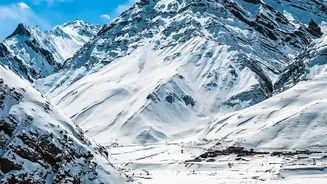
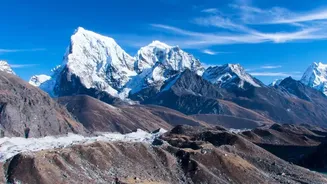
The key to all these records is Ladakh's geography as a high altitude cold desert. It lies in the rain shadow of the great Himalayan range. Monsoon clouds from the south are blocked by the mountains, forcing them to release their moisture before they can reach Ladakh. This results in extremely low precipitation, creating arid, desert like conditions. Simultaneously, the high elevation means the air is thin and cold, unable to hold much moisture. This unique combination of extreme altitude, dry air, and clear skies creates the perfect environment for everything from record breaking high passes and astronomical observatories to unique saline lakes.