






The Mahabaleshwar Monopoly
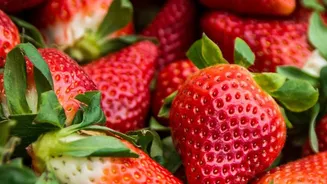
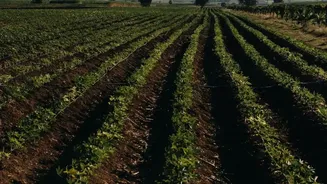
For decades, the hills of Mahabaleshwar and Panchgani in Maharashtra have been the heartland of India's strawberry production, accounting for around 85% of the country's total output. The region's cool climate and red laterite soil, a legacy of its introduction
by the British, create the perfect conditions for growing the sweet, perishable fruit. This specific climate requirement means that for most of India, fresh strawberries are a seasonal luxury, tightly linked to the mild winters of this small pocket of the Western Ghats. The Mahabaleshwar strawberry even holds a Geographical Indication (GI) tag, cementing its unique identity.
A Crop Under Pressure
However, this finely tuned agricultural system is facing a severe threat: climate change. Rising temperatures, unpredictable rainfall, and unseasonal heatwaves are disrupting the strawberry's life cycle. Farmers report that temperatures hovering around 35°C, well above the ideal 15-25°C range, cause the fruit to ripen too quickly, resulting in smaller, less flavorful berries that are often unsuitable for sale. This leads to significant financial losses for the thousands of farmers who depend on the crop. Recent studies and farmer surveys confirm that warming winters and erratic weather contribute to yield volatility, reduced sweetness, and a shorter shelf life for the berries.
The Quest for a Resilient Berry
In response to this growing crisis, agricultural scientists in Maharashtra are taking matters into their own hands. India’s strawberry industry has long relied on plant varieties imported from California, Florida, and Europe, which are not bred for local conditions. To break this dependency and create a more secure future, researchers at Mahatma Phule Krishi Vidyapeeth (MPKV), a key agricultural university, have launched a pioneering experiment. Their goal is to develop India's first indigenous, climate-resilient strawberry cultivar.
The Science of Survival
The project is a collaboration with the prestigious Bhabha Atomic Research Centre (BARC). Researchers are employing a technique known as mutation breeding, using controlled, low-dose gamma irradiation on strawberry plant tissues. This process induces stable genetic mutations, essentially fast-tracking evolution. The aim is to generate new plant lines that naturally tolerate the heat stress of Indian summers while retaining the large fruit size and firm texture that consumers demand from imported varieties. While developing a completely new variety is a long-term goal that could take over a decade, the research represents a critical step toward agricultural self-reliance. This work runs parallel to other efforts like those at the ICAR-National Institute of Abiotic Stress Management in Baramati, which focuses on broader strategies to help crops withstand environmental pressures like drought and heat.
Beyond the Strawberry Fields
The success of this project would have implications far beyond ensuring a steady supply of strawberries for our fruit salads and desserts. It would provide a lifeline for farmers in the Mahabaleshwar region, making their livelihoods less of a gamble against the weather. Furthermore, it could open up possibilities for cultivating strawberries in non-traditional areas of India, which is already starting to happen with some heat-tolerant varieties. Ultimately, creating a strawberry 'built for Indian heatwaves' is a template for the future of Indian agriculture. As climate change continues to challenge the cultivation of various crops, from mangoes to wheat, this kind of proactive, science-driven adaptation will be essential for ensuring the nation's food security and supporting its farming communities.