





Understanding the Gaganyaan Mission
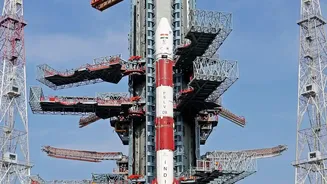
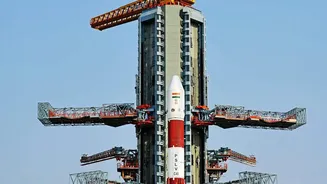
Before diving into the nuts and bolts of safety, it’s worth remembering what Gaganyaan represents. It is India's inaugural human spaceflight program, aiming to launch a crew of three astronauts into a Low Earth Orbit of 400 kilometres for a three-day
mission. Upon completion, the crew module will return, splashing down in the Indian Ocean. This landmark endeavour will make India only the fourth nation in the world—after the US, Russia, and China—to independently send humans into space, marking a monumental achievement for the Indian Space Research Organisation (ISRO) and the country.
The Philosophy: Safety is Not Negotiable
In human spaceflight, there is no margin for error. While launching into orbit is a challenge, bringing the crew back safely is the ultimate measure of success. This philosophy is the driving force behind the series of intensive qualification tests ISRO is currently undertaking. A qualification test is not a simple trial; it’s a process where a system is deliberately stressed beyond the limits it would ever face during an actual mission. If it survives these gruelling ground tests, it earns its right to fly. This methodical, step-by-step validation is crucial for building the reliability needed to protect human lives in the harsh environment of space.
Test 1: Surviving a Launchpad Emergency
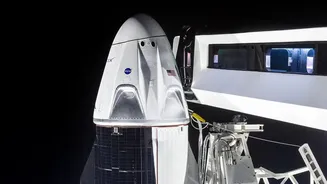
The first line of defense is the Crew Escape System (CES), designed for the terrifying possibility of an emergency during the launch sequence. ISRO has rigorously tested this system, including through Pad Abort Tests (PAT) and In-flight Abort demonstrations. The Pad Abort Test, first conducted in 2018, simulates a failure on the launchpad itself. In this scenario, powerful, quick-acting motors in the CES ignite to pull the entire crew module away from the compromised rocket, carrying it to a safe altitude before it parachutes down. More recently, the TV-D1 mission demonstrated an in-flight abort, triggering the escape sequence at transonic speeds, which is the point of maximum aerodynamic stress on the vehicle. The test successfully proved the system could whisk the crew capsule to safety even during the most challenging phase of ascent.
Test 2: Ensuring a Clean Separation and Descent
The journey home is just as perilous as the launch. A series of recent tests focused on the critical separation events that must occur flawlessly for a safe return. One test validated the structural integrity of the crew module when the apex cover is jettisoned. This cover protects the parachutes during the mission and must be discarded cleanly to allow them to deploy. Another test focused on the umbilical connection between the crew module and the service module, which supplies it with power and life support. Before re-entry, this connection must be severed. The test confirmed a clean separation, ensuring the crew module can begin its descent without any interference.
Test 3: A Stable Splashdown and Recovery
The final moments of the mission are a return to Earth with a splashdown in the sea. But an ocean landing brings its own challenges. Waves can easily tip the capsule, leaving it in a dangerous, unstable position that complicates recovery efforts. To solve this, ISRO developed the Crew Module Uprighting System (CMUS). Think of it as a set of sophisticated flotation bags attached to the capsule. In a recently completed qualification test, ISRO proved that this system, which uses stored cold gas to inflate the bags, can successfully and rapidly turn the capsule upright after it lands in water. This ensures the astronauts remain in a stable orientation while they await recovery by the Indian Navy.