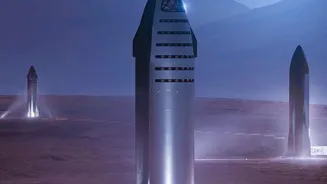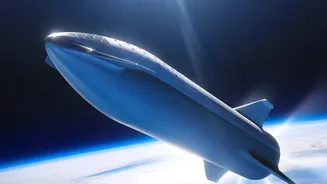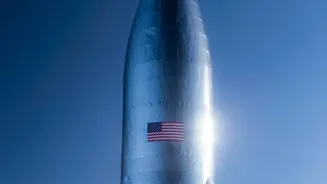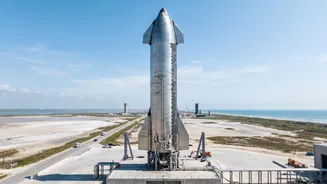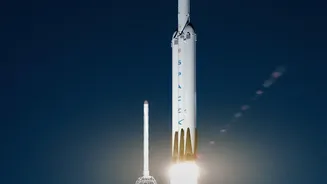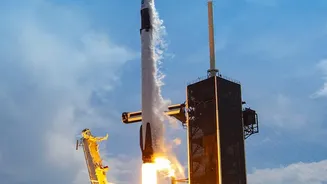





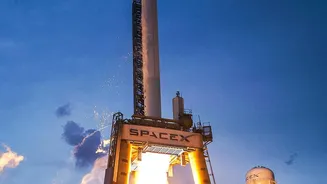
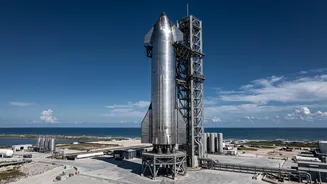
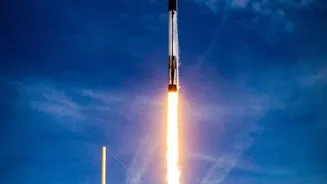
In a feat that felt more like science fiction than engineering, SpaceX has successfully caught its massive Starship spacecraft out of the sky using the robotic arms of its launch tower. This historic moment from Flight 15 is a giant leap forward.
A Catch for the Ages
On November
14, 2026, after spending over 22 hours in orbit, the 171-foot-tall Starship vehicle descended through the clouds over Starbase, Texas. It performed a dramatic 'belly-flop' maneuver to slow its descent, then fired its Raptor engines to flip upright just in time to slide perfectly between the giant 'chopstick' arms of the launch tower, known as 'Mechazilla'. The arms closed, securing the ship and marking the first-ever successful catch of an orbital-class upper stage. The achievement was the primary success of Starship's 15th test flight, which began the day prior. During its time in space, the ship also deployed 26 Starlink satellites into orbit.
Why This Catch Changes Everything
For decades, rocket upper stages have been disposable, burning up on reentry or crashing into the ocean. This makes spaceflight incredibly expensive. SpaceX revolutionized the industry by landing and reusing its Falcon 9 first-stage boosters, but the upper stage has remained expendable. Starship is designed to change that by being the world's first fully and rapidly reusable transportation system. Catching the upper stage is the most critical piece of that puzzle. It eliminates the need for heavy landing legs on the vehicle, saving weight, and places the ship directly onto the launch mount, ready for inspection, refueling, and another flight. This is the key to achieving an airplane-like launch cadence, potentially with multiple flights per day, which could dramatically lower the cost of access to space.
A Mission of Mixed Success
While the Starship catch was a monumental victory, Flight 15 was not a complete success. The mission plan called for a 'double catch'—recovering both the Super Heavy booster and the Starship upper stage. However, the Super Heavy booster, which has been successfully caught on three previous occasions, experienced an issue during its return. A low-fuel alarm triggered an automatic abort, causing the booster to divert for a splashdown in the Gulf of Mexico, where it was destroyed. This means the goal of recovering an entire two-stage orbital system in a single mission remains elusive. The split outcome highlights both the incredible progress and the steep challenges still ahead in perfecting this complex system.
The Next Giant Leap: Proving Reuse
Catching the ship is one thing; reusing it is another. The headline-making maneuver is only the first step in a long process. Now, SpaceX engineers must meticulously inspect the recovered Starship. The primary focus will be on the thermal protection system—the thousands of ceramic tiles that shield the vehicle from the 2600°F heat of reentry. Any damage to these tiles or to the vehicle's structure must be assessed. Post-flight analysis has already revealed some damage to the softer ablative material near the 'chopstick' contact points, a new problem to be solved. The ultimate test will be to successfully refurbish and re-fly this same vehicle, demonstrating that the system is not just reusable in theory, but in practice. Only then can the true economic and operational benefits of the design be realized.