
More Than Just Friction
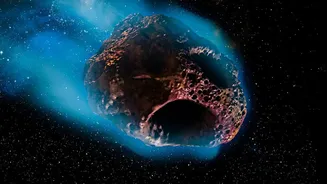
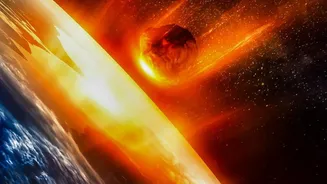
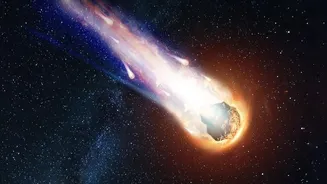
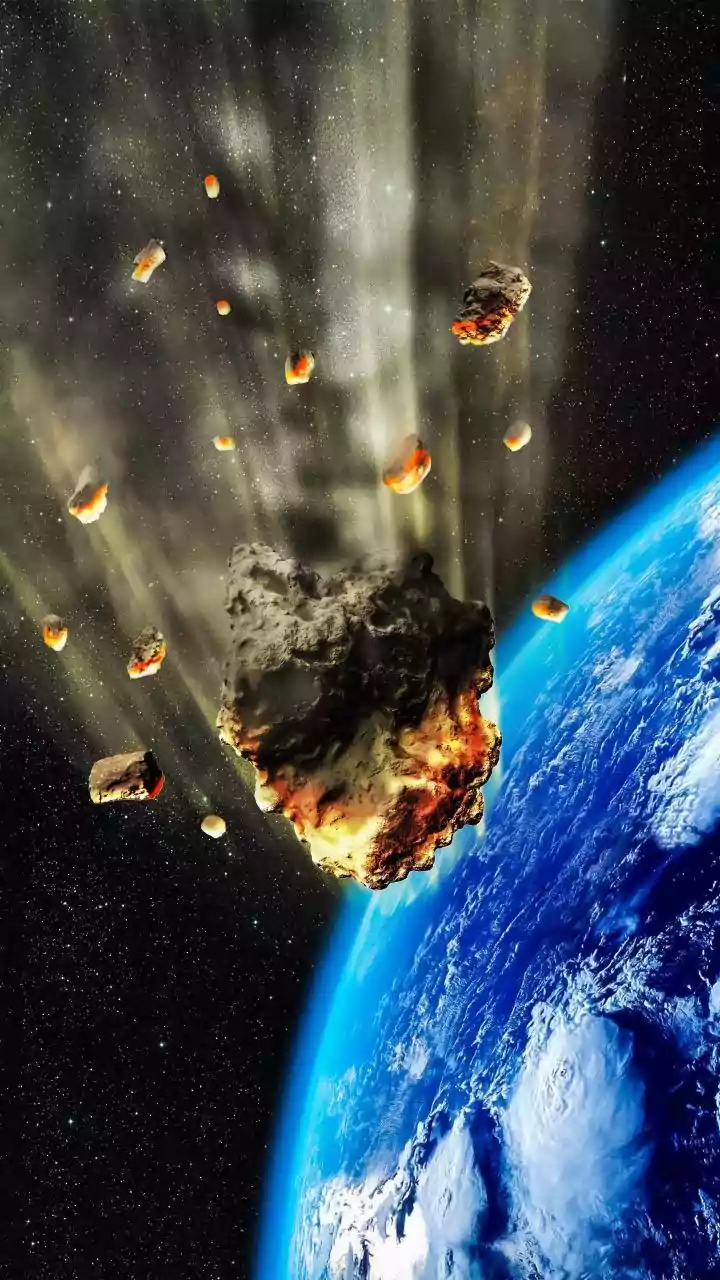
When a small space rock, called a meteoroid, plunges into Earth's atmosphere at incredible speeds, it's not just friction that makes it glow. The intense pressure compresses and superheats the air in front of it, creating a pocket of plasma hotter than
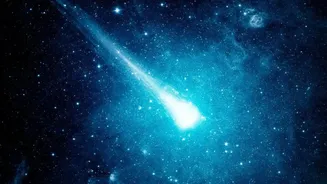
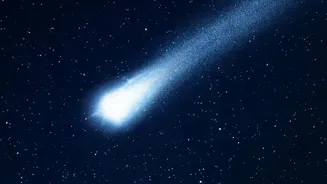
the surface of the sun. This extreme heat vaporizes the meteoroid itself, turning solid rock and metal into a glowing gas. What we see as a meteor, or shooting star, is the light emitted by both the vaporized material from the rock and the energized atmospheric gases around it. Most of these particles are no bigger than a grain of sand, yet they can create spectacular streaks of light across the night sky as they disintegrate miles above our heads.
A Rainbow of Cosmic Clues
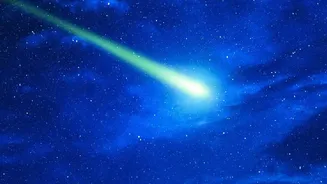
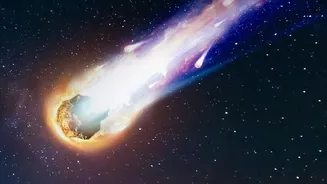
The captivating part is that not all shooting stars look the same. Their colors offer a direct glimpse into their chemical composition, much like a cosmic flame test. The different minerals and elements within the meteoroid vaporize and emit light at specific wavelengths, resulting in a vibrant palette. An orange-yellow glow, for example, points to the presence of sodium. A bright yellow streak is often a sign of iron. Blue-green flashes are typically caused by magnesium, while a rarer violet or purple hue indicates calcium. Even the surrounding atmosphere plays a role; sometimes the reddish glow you see comes from superheated nitrogen and oxygen molecules in the air itself.
How Scientists Read the Sky
Scientists, including teams at NASA, don't just guess what these colors mean. They use a technique called spectroscopy. By passing the meteor's light through a prism or diffraction grating, they can spread it out into its constituent colors, creating a spectrum. This spectrum isn't a continuous rainbow; it has bright lines, called emission lines, at very specific points. Each element has a unique spectral fingerprint, so by identifying these lines, researchers can definitively determine the elements present in the vaporized meteoroid. This is how we know that the greenish Geminids are rich in nickel and magnesium, while the fast-moving Leonids often show a bluish-white tint due to their magnesium content. This process allows scientists to "read" the meteor's story from millions of miles away.
NASA's Latest Cosmic Snapshots
NASA is constantly refining our understanding of these celestial visitors. One of the agency's Astronomy Pictures of the Day from August 3, 2026, perfectly captures this phenomenon, showing a bright, multicolored meteor streak. The image highlights how the vaporized gas and dust leave a trail whose colors give clues to its composition. Furthermore, research projects like NASA's METEOR investigation on the International Space Station use specialized cameras to capture spectra from above the atmosphere, avoiding weather interference and providing clearer data. This research helps scientists connect meteor compositions to their parent bodies, like comets or asteroids. Recent analyses of newly fallen meteorites, aided by fireball tracking, have even uncovered evidence of ancient brines that altered the rock's minerals, preserving a rich inventory of organic compounds and providing clues to the early solar system's chemistry.
Your Guide to Reading the Stars
You don't need a high-tech lab to appreciate this science. The next time you're out watching a meteor shower, like the upcoming Perseids, pay close attention to the colors you see. If you spot a distinctly green flash, you can tell your friends it was likely a meteoroid rich in magnesium or nickel burning up. See a flash of orange? You're probably looking at the signature of sodium. Knowing this adds a fascinating layer to the simple, beautiful act of watching a shooting star. It transforms from a random flash into a data point, a tiny piece of a distant asteroid or comet telling you what it was made of as it takes its final bow.