


Venus Reaches Peak Brilliance
Throughout September, the planet Venus will be a commanding presence in the evening sky. On September 18, it reaches its peak brightness for this viewing cycle, shining more brilliantly than any star. Look for this dazzling point of light low in the western
sky shortly after sunset. For the best view from India, find a spot with an unobstructed western horizon, as the planet sets relatively quickly after the sun. Its intense, steady glow makes it unmistakable. Even in cities with significant light pollution, Venus will cut through the haze, making it one of the month's most accessible celestial treats.
The Autumnal Equinox Arrives
While not a visual event you can watch in a moment, the September equinox is a significant astronomical milestone. On September 23, 2026, the Sun will cross the celestial equator from north to south. This moment marks the official start of autumn in the Northern Hemisphere. For everyone on Earth, day and night are of nearly equal length. For stargazers in India, this transition is important. It signals the coming of the post-monsoon observing season, which often brings clearer, dust-free skies, heralding some of the best stargazing conditions of the year.
A Glorious Harvest Moon
The full moon on September 26 is known as the Harvest Moon, so named because it's the full moon closest to the autumnal equinox. This year, it rises just four days after the equinox. A unique feature of the Harvest Moon is that it rises at nearly the same time for several consecutive evenings, providing ample twilight illumination that was historically useful for farmers. Look for it to rise in the east around sunset, glowing with a beautiful golden-orange hue as its light filters through the dense atmosphere near the horizon. For an added bonus, the planet Saturn will appear nearby, looking like a bright, steady star.
A Parade of Planets
September is a fantastic month for planet-spotting. Besides the show-stopping Venus, four other naked-eye planets are on display. Mars and Jupiter will be visible in the pre-dawn sky. Look towards the east before sunrise to spot them. Early in the month, a waning crescent Moon will pass near Mars, creating a lovely pairing. Later, on the morning of September 25, Mars will form a neat trio with the bright stars Castor and Pollux in the constellation Gemini. Saturn will be visible for much of the night, appearing as a bright, yellowish point of light not far from the Harvest Moon towards the end of the month. Mercury makes a brief appearance but will be very low on the horizon and difficult to spot after sunset.
The Elusive Zodiacal Light
For those with access to truly dark skies away from city lights, September offers a chance to see the zodiacal light. This faint, ethereal pyramid of light appears in the east before dawn. It's not starlight but sunlight reflecting off countless dust particles orbiting the sun in the same plane as the planets. It is sometimes called the "false dawn." The best time to look for it is during a moonless period. With the New Moon on September 11, the days surrounding it provide an ideal window. Be patient and let your eyes fully adapt to the darkness for at least 20 minutes to catch a glimpse of this delicate celestial glow.
Constellations Take Centre Stage
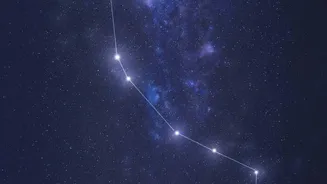
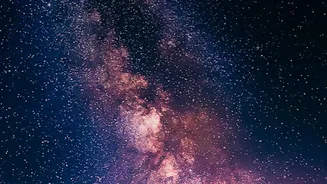
As the evenings grow longer, prominent constellations become easier to enjoy. The Summer Triangle, composed of the bright stars Vega, Deneb, and Altair, will still be high in the sky after sunset. These stars mark the constellations Lyra, Cygnus, and Aquila. For those in darker locations, this is also one of the last chances of the year to get a good evening view of the Milky Way's core, which appears as a faint, glowing band of light rising from the southern horizon, often seen near the 'Teapot' shape in the constellation Sagittarius. Learning to spot these major star patterns provides a wonderful map for exploring the wider cosmos with just your eyes.