






More Than Bricks and Mortar
First, it's important to understand that UNESCO has two distinct heritage lists. The famous World Heritage List protects tangible places—buildings, cities, and natural sites. But Durga Puja was added to the 'Representative List of the Intangible Cultural
Heritage of Humanity'. This list was created to safeguard living expressions passed down through generations. Think of it as protecting the 'how' rather than the 'what'. It includes oral traditions, performing arts, rituals, festive events, and the knowledge and skills used in traditional crafts. The French baguette's artisanal know-how and Jamaican reggae music are on this list for the same reason: their value lies in the practice, the skill, and the cultural meaning, not in a physical object you can put in a museum. Durga Puja is the first festival in Asia to receive this honour, making the recognition particularly historic.
A Festival Forged by Community
Unlike a monument built by a king, Durga Puja is a grand spectacle built by the people, for the people, every single year. The recognition celebrates this 'Sarbojonin' or 'for all people' spirit. The festival is a massive collaborative effort. Neighbourhood committees, known as 'paras', raise funds, plan themes, and manage the logistics. This community-in-motion approach turns the entire city of Kolkata into a sprawling, open-air art gallery. UNESCO noted that the festival dissolves social divides, as people from all walks of life, regardless of class or religion, participate in the celebration. Crowds of spectators walk for miles, admiring the temporary pavilions, or 'pandals', creating a shared cultural experience that is remade annually from the ground up.
Where Art is Born to Disappear
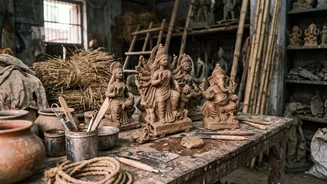
The very heart of the festival lies in a beautiful contradiction: immense artistic effort is poured into creations that are designed to be temporary. Weeks and months before the Puja, artisans in neighbourhoods like Kumartuli sculpt magnificent idols of Goddess Durga and her family from unfired clay, often sourced from the Ganga river. These artisans, whose skills have been passed down for generations, are a central part of the 'living heritage'. The pandals themselves are architectural marvels, often based on complex themes from mythology to contemporary social issues. Yet, at the end of the ten-day festival, the idols are immersed back into the river, symbolising the cycle of life and the goddess's return to her home. This ephemeral nature is the exact opposite of a permanent monument. UNESCO's tag honours the continuous cycle of creation and immersion, and the incredible skill of the craftspeople who make it happen.
An Inclusive and Thriving Ecosystem
UNESCO specifically described the festival as 'the best instance of the public performance of religion and art, and a thriving ground for collaborative artists and designers'. This points to the festival's role as a massive creative economy. A 2019 study estimated that the industries around Durga Puja generate thousands of crores for West Bengal's economy, contributing significantly to the state's GDP. The recognition is not just for the religious rituals, but for the entire ecosystem that includes idol makers, pandal designers, lighting technicians, traditional drummers ('dhakis'), and countless other contributors. Furthermore, the listing commended the festival's inclusive nature, with specific praise for initiatives that involve marginalised groups and women in the celebration and organisation, ensuring the heritage remains accessible and relevant to all.