







The Growing Threat of 'Water Bombs'
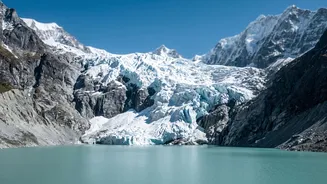
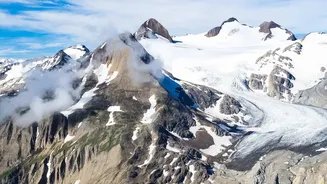
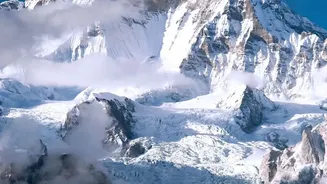
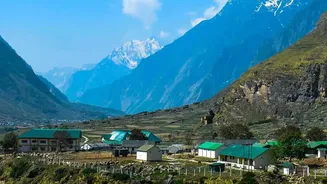
High in the mountains, a new and dangerous phenomenon is accelerating: the formation of glacial lakes. As global temperatures rise, Himalayan glaciers are melting at an alarming rate, losing ice twice as fast as they did before the year 2000. This meltwater
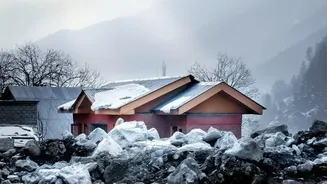
pools into massive lakes, often held back only by unstable natural dams of loose rock and soil. These are known as Glacial Lake Outburst Floods (GLOFs), or 'water bombs'. When these natural dams fail—due to a landslide, an avalanche, or simply the pressure of the water itself—they can release a catastrophic torrent downstream, wiping out villages, roads, and critical infrastructure like hydropower plants in minutes. Recent disasters, like the one in Sikkim in 2023, serve as a grim reminder of their destructive power.
A Cascade of Compounding Dangers
GLOFs are not the only threat. The same warming that melts glaciers is also thawing permafrost—the frozen ground that acts like cement holding steep mountain slopes together. As this 'cement' weakens, the risk of massive landslides increases, which can themselves trigger GLOFs or cause devastation on their own. These events often occur as a cascade: a rockfall can become a debris flow, which then blocks a river, creating a temporary lake that bursts and generates a flash flood. This complex chain reaction makes prediction difficult and underscores the fragility of the entire Himalayan ecosystem. A single event can have multiple, compounding effects, travelling hundreds of kilometres and crossing international borders.
The Gaps in Our Watchful Eye
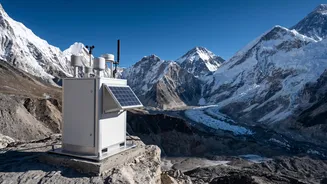
Despite the clear and present danger, monitoring across the vast and remote Himalayan terrain is dangerously sparse. Out of an estimated 39,660 glaciers in the Himalaya-Karakoram range, only a tiny fraction—around 24—are consistently monitored for their health. While India's National Disaster Management Authority (NDMA) has identified nearly 200 high-risk glacial lakes, deploying effective, real-time warning systems remains a monumental task. The recent catastrophic floods in neighbouring Nepal have spurred states like Uttarakhand to step up monitoring of its own 13 identified sensitive lakes, but much of the work to install advanced sensors and warning systems is only just beginning. The challenge is immense, as conventional ground sensors are difficult and expensive to maintain in such harsh environments.
Technology and Community: The Path Forward
Closing these gaps requires a two-pronged approach. The first is technology. A new generation of monitoring must combine multiple tools: high-resolution satellite imagery to spot changes in lakes and slopes, radar systems that can detect ground movement of even a few centimetres, and on-ground sensors for real-time data on water levels and seismic activity. Initiatives like the landslide early warning system developed by IIT Mandi, which has shown over 90% accuracy, offer a glimpse of what's possible. However, technology is only part of the solution. These systems must be community-based, integrating local knowledge and ensuring that warnings reach the last mile. Empowering local residents to be the first line of defence is crucial for a system to be truly effective.
A National Security Imperative
The stability of the Himalayas is not merely a regional environmental issue; it is a matter of national security and economic stability. These mountains are the 'Water Towers of Asia', feeding the ten great river systems, including the Ganga and Brahmaputra, that provide water for over 1.6 billion people. The region's vast hydropower potential is also at risk, with major projects sitting directly in the path of potential GLOFs. The failure to adequately monitor these remote valleys leaves millions of people, billions in infrastructure, and the nation's water and energy security exposed to a rapidly growing and unpredictable threat. Investing in a comprehensive, permanent Himalayan monitoring network is therefore not an expense, but an essential investment in our collective future.