


The Battle Over Billions
At the forefront of the dispute is the issue of money—specifically, tens of billions of dollars in Iranian assets frozen in foreign banks due to international sanctions. Iran has demanded the release of these funds as a prerequisite for meaningful progress,
framing it as both a practical necessity and a crucial test of trust. Recent reports indicate Tehran is seeking an immediate release of at least $12 billion upon signing an initial memorandum, with the remainder to follow. From Iran's perspective, this is not a concession but the return of its own money, essential for stabilizing its sanctions-battered economy. The US, however, is wary of releasing a large cash infusion that could be used to fund Iran's military activities or its regional proxies. This has led to a financial standoff, where Washington prefers a phased release tied to specific compliance benchmarks, while Tehran insists on a significant upfront payment to demonstrate goodwill.
The Strait of Hormuz Impasse
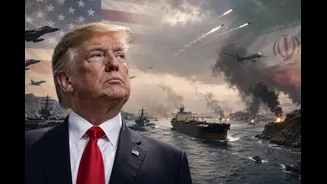
Maritime security, centered on the strategic Strait of Hormuz, is another major point of contention. Roughly one-fifth of the world's oil supply passes through this narrow channel, making its accessibility vital for global economic stability. Following military exchanges earlier in the year, Iran has asserted greater control over the strait, obstructing vessels and insisting it must authorize passage. Iran's position is that the US naval presence and blockade must end before conditions can normalize. The United States and its allies insist on the principle of unrestricted freedom of navigation and reject any attempts by Iran to charge fees or control passage. While Iran has recently engaged in talks with Oman to establish a mutually acceptable transit route, its fundamental disagreement with Washington over who controls the waterway remains. For the US, it's a matter of international law and security; for Iran, it's an assertion of sovereignty and a powerful source of leverage.
Defining the Nuclear Limits
The original catalyst for the crisis—Iran's nuclear program—remains the most technically complex and high-stakes issue. Since the US withdrawal from the 2015 JCPOA nuclear deal, Iran has significantly advanced its nuclear activities. It has been enriching uranium to 60% purity, a level far beyond civilian needs and perilously close to the 90% required for a weapon. This dramatically shortens the 'breakout time'—the period needed to produce enough fissile material for one bomb. While a potential memorandum of understanding would reaffirm Iran's commitment not to develop nuclear weapons, the details are a sticking point. Key disagreements revolve around how much of its highly enriched uranium stockpile Iran must down-blend or ship out, the extent of future inspections by the International Atomic Energy Agency (IAEA), and what limits will be placed on its advanced centrifuges. The US seeks stringent, long-term verification, but Iran is resistant to concessions it feels undermine its national sovereignty.
A Deep and Pervasive Trust Deficit
Underpinning all these specific disagreements is a profound lack of trust. From Tehran's viewpoint, the US unilaterally abandoned the 2015 nuclear deal, making any new American promises unreliable. This history fuels Iran's insistence on upfront, tangible gains like the release of frozen assets. Conversely, Washington views Iran's nuclear advancements and regional actions as evidence of bad faith, justifying a cautious, phased approach to any sanctions relief. The contradictory public statements from both sides in early August 2026, with President Trump announcing imminent talks while Iran's foreign ministry denied them, highlight this chasm of communication and credibility. Until this fundamental trust deficit is addressed, finding common ground on money, maritime rights, and nuclear work will remain an uphill battle, with each side demanding the other take the first leap of faith.