




The Green Revolution's Double-Edged Sword
The story begins with the Green Revolution, which transformed Punjab into an agricultural powerhouse. To ensure India's food security, farmers were encouraged to cultivate high-yield varieties of wheat and paddy (rice). This monoculture, however, has
led to severe consequences. The rice-wheat cycle now dominates over 80% of the state's cropped area. Paddy is a notoriously thirsty crop, requiring vast amounts of water. To produce one kilogram of rice, it takes an estimated 3,000 litres of water. This intensive cultivation has led to a dramatic and alarming depletion of groundwater, with the water table falling precariously across most of the state.
What is Crop Diversification?
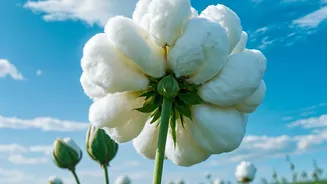
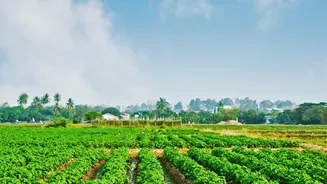
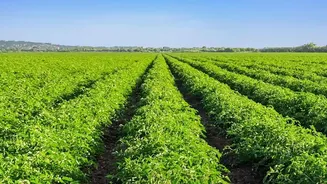
In simple terms, crop diversification is the move away from the dominant rice-wheat cycle to a wider variety of crops. The goal is to encourage farmers to cultivate less water-intensive alternatives that are better suited to Punjab's agro-climatic conditions. These alternatives include maize, cotton, pulses (like moong and arhar), oilseeds, and various fruits and vegetables. The benefits are manifold: conserving groundwater, improving soil health, breaking pest and disease cycles, and potentially increasing farmers' income by tapping into different markets. It is seen not just as an economic strategy, but as an ecological necessity to ensure the long-term sustainability of agriculture in the state.
The MSP Safety Net: A Major Hurdle
If diversification is so beneficial, why aren't more farmers switching? The primary reason is economic risk. For decades, the government has provided a Minimum Support Price (MSP) and assured procurement for wheat and paddy. This creates a powerful safety net, guaranteeing farmers a buyer and a fixed price for their produce. Most alternative crops lack this robust support system. Farmers are reluctant to risk planting maize or pulses if they are not confident about market prices or finding buyers. Policies like free or heavily subsidised electricity for agriculture also incentivise the use of water pumps for thirsty crops like paddy, further discouraging a shift.
The Alarming Water Crisis
The urgency for diversification is underscored by Punjab's severe water crisis. Aquifers in approximately 79% of the state's area are overexploited. The continuous extraction of groundwater for paddy cultivation has led to a deficit where more water is being drawn out than is being replenished. In many areas, farmers have to drill tubewells deeper and deeper, which not only increases costs but also brings up water that can have higher concentrations of heavy metals, making it less suitable for consumption and agriculture. Experts warn that if this trend continues, Punjab risks turning into a desert, which would threaten not only its own agricultural productivity but also India's national food security.
Government Initiatives and the Path Forward
Both the central and state governments have launched programs to promote diversification. The Crop Diversification Programme (CDP), for instance, provides financial assistance and subsidies for seeds and machinery for alternative crops. There have been pushes to establish market intervention schemes that would pay farmers the difference if market prices for alternative crops fall below a set level. However, the implementation of these schemes has often been slow. For diversification to succeed on a large scale, experts argue that a multi-pronged approach is needed. This includes strengthening market infrastructure like cold storage for perishable goods, ensuring MSP and procurement for alternative crops, and investing in agro-processing industries to create demand for a wider range of farm produce.