




The High Cost of Reaching Orbit
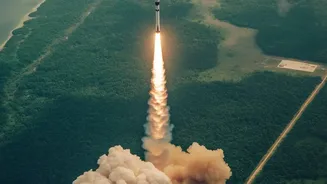
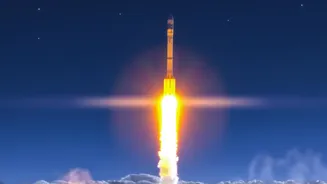
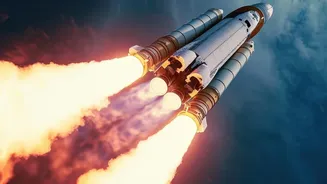
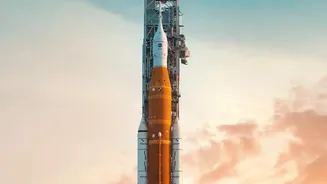
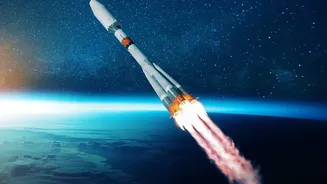
For decades, the only way to escape Earth's gravity has been to strap a payload to a massive, fuel-guzzling rocket and light the fuse. While companies like SpaceX have made huge strides in reducing costs through reusability, launching anything into orbit
remains a multi-million dollar affair. A dedicated launch on a Falcon 9 rocket, for instance, costs around $74 million. This high price tag is a major bottleneck for the booming space industry, which relies on deploying constellations of satellites for everything from internet service to Earth observation. The fundamental challenge is what engineers call the rocket equation: the vast majority of a rocket's mass is just the fuel needed to lift its own fuel, leaving little room for the actual payload.
A Cannon to the Cosmos
Enter Longshot Space, an Oakland-based startup founded in 2020 by CEO Mike Grace and CTO Nathan Saichek. Their plan is to bypass the most fuel-intensive part of a launch by using kinetic energy. The concept, often called a "space gun," involves using a massive ground-based accelerator to fire a projectile at hypersonic speeds. The idea itself isn't new, drawing inspiration from historical projects like the 1960s Project HARP and even Germany's V-3 cannon from World War II. Longshot's innovation lies in its specific approach: a multi-injection pneumatic cannon that uses a series of compressed gas injections to gradually accelerate a payload down a very long tube.
How It Works: A Series of Pushes
Imagine a giant potato gun, but instead of one big blast of air, there are multiple air tanks spaced along the barrel. As the projectile flies past, each tank gives it another powerful push, adding more and more speed. Longshot's prototype, a 60-foot pipe, has already propelled payloads to over four times the speed of sound (Mach 4) using compressed gas like nitrogen. The ultimate goal is to reach orbital velocity, around Mach 25, which would require a much larger system. The company plans to build a launcher over 500 meters long in the Nevada desert, using lighter and faster hydrogen gas to push heavier payloads. The final orbital cannon could be up to 15 kilometers (over nine miles) long.
The Challenge of Survival
Firing something at Mach 25 presents enormous challenges. One is the immense g-force, or acceleration, which could crush conventional satellites. Unlike a rival system from SpinLaunch that uses a centrifuge creating up to 10,000 Gs, Longshot says its multi-injection method distributes the acceleration, making it more gentle on payloads. Another huge hurdle is surviving the fiery trip through the dense lower atmosphere at hypersonic speeds. The projectile needs robust thermal protection to avoid burning up moments after leaving the barrel. Longshot is developing a hypersonic glide vehicle called Glowrider, which would use its design to generate lift and essentially skip off the atmosphere to gain altitude.
A Stepping-Stone Strategy
Building a nine-mile space cannon requires immense capital. To get there, Longshot is pursuing a clever intermediate market: hypersonic testing for the military. Currently, testing materials and components at hypersonic speeds requires an expensive rocket launch, costing between $6 million and $8 million per test. Longshot believes it can offer the same service for as little as $150,000. This provides a crucial revenue stream and a way to prove their technology at scale. The company has already secured over $20 million in funding from investors like Sam Altman and government contracts from the U.S. Air Force and Missile Defense Agency, signaling serious interest in their approach.
The Future of Space Access?
If Longshot succeeds, the economic impact would be staggering. The company claims its system could eventually reduce the cost of launching payloads to orbit to just $10 per kilogram. For comparison, even the most efficient rockets today cost several thousand dollars per kilogram. Such a dramatic price drop would fundamentally change humanity's relationship with space, making large-scale satellite constellations, in-space manufacturing, and resource gathering far more economically viable. It would represent a paradigm shift from chemical rockets to ground-based infrastructure, treating space access less like a bespoke mission and more like a utility.