



A Historic Partnership Recharged
NASA and the Department of Energy (DOE) recently signed a new Memorandum of Understanding to accelerate the development of nuclear power and propulsion systems for space. This isn't a new concept; the two agencies have collaborated for over 50 years on similar
technologies. However, this renewed agreement formalizes and strengthens their joint effort, creating a unified framework for everything from research and fuel production to testing and mission operations. The goal is to supercharge deep-space exploration by providing the robust energy sources needed for long-duration missions far from the sun. NASA Administrator Jared Isaacman called it the beginning of the 'Nuclear NASA-era,' a transformation that will allow spacecraft to travel farther, operate longer, and conduct more ambitious science than ever before.
The Power Problem in Deep Space
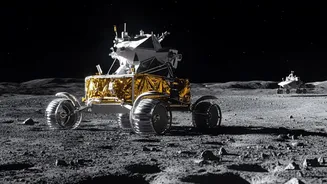
On Earth, we take electricity for granted. In space, it's one of the biggest hurdles. While solar panels are effective for satellites in Earth orbit or for missions to inner planets, their utility diminishes dramatically in deep space where sunlight is faint. Furthermore, they are not practical for locations like the Moon's polar craters, which are in near-permanent shadow, or during the 14-day-long lunar night. These extreme environments, with their freezing temperatures, demand a power source that is continuous, reliable, and independent of sunlight. This is where nuclear power becomes essential. It offers a constant, high-density energy supply that can keep life support, scientific instruments, and rovers running no matter the external conditions.
Fission Power for a Moon Base
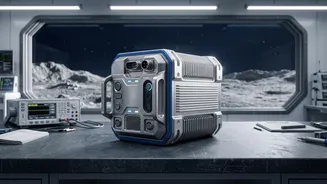
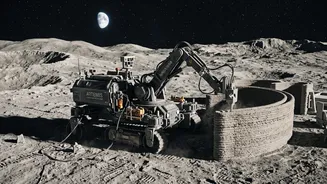
A central focus of the partnership is the Fission Surface Power (FSP) project. The plan is to design and build a small nuclear fission reactor capable of operating on the lunar surface by the early 2030s. This system works by splitting uranium atoms to generate heat, which is then converted into electricity—the same basic principle used in terrestrial nuclear power plants. NASA is working with industry partners to develop a 40-kilowatt class system, which is enough energy to continuously power about 30 households for a decade. This initial demonstration, dubbed Lunar Reactor-1 (LR-1), is seen as a critical stepping stone, proving the technology that will one day power habitats, resource utilization facilities, and other infrastructure for a permanent human presence on the Moon under the Artemis program.
Proven Technology and Future Propulsion
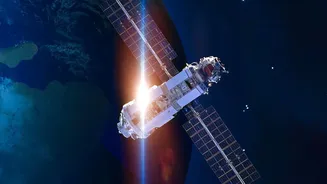
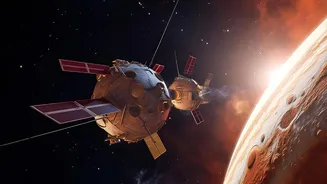
Beyond surface power, the collaboration also includes Radioisotope Power Systems (RPS), a technology with a long and successful history in space. Unlike fission reactors, which split atoms, RPS devices like the Multi-Mission Radioisotope Thermoelectric Generator (MMRTG) convert heat from the natural decay of plutonium-238 into electricity. This technology has reliably powered iconic missions like the Voyager spacecraft and the Curiosity and Perseverance rovers on Mars. Looking ahead, the partnership is also developing nuclear electric propulsion systems. The Space Reactor-1 Freedom (SR-1) mission, targeting a 2028 launch, aims to be the first fission-powered spacecraft, using its reactor to power efficient electric thrusters on a journey to Mars. This would represent a major leap from laboratory concept to operational deep-space application.
Enabling the Next Generation of Exploration
The development of these nuclear technologies is not just an engineering exercise; it is the key that unlocks the next chapter of human exploration. With a reliable fission reactor on the Moon, astronauts could establish a sustainable base, surviving the long lunar nights and conducting unprecedented scientific research. This lunar outpost would also serve as a crucial proving ground for the even more demanding energy needs of future human missions to Mars. Furthermore, the continued use of RPS will power robotic explorers to the far reaches of our solar system, such as the upcoming Dragonfly mission to Saturn's moon Titan. By investing in this renewed partnership, NASA and the DOE are laying the essential groundwork to turn science fiction concepts of long-term off-world living into a tangible reality.